
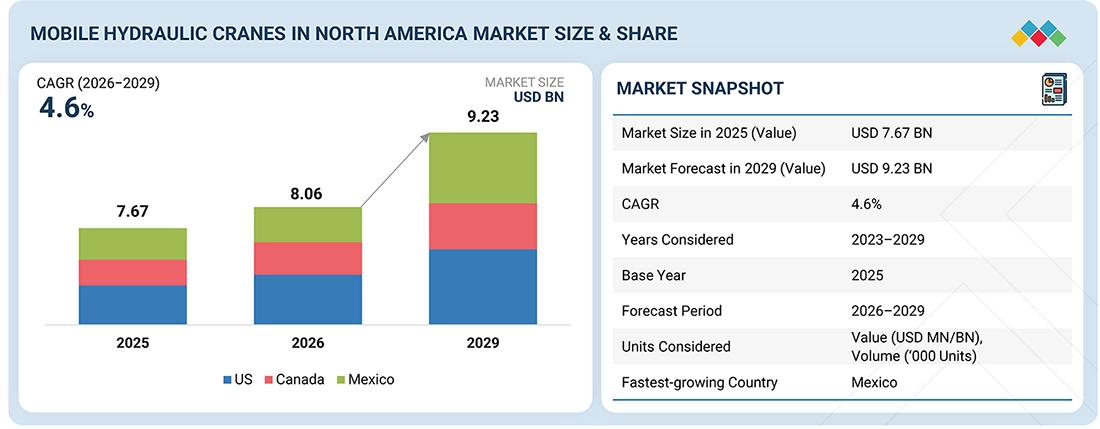
The global Mobile Hydraulic Cranes Market continues to expand as demand for versatile and high-capacity lifting equipment grows across construction, infrastructure, mining, renewable energy, oil and gas, and industrial sectors. Among the most significant product segments are rough terrain cranes, all-terrain cranes, and crawler cranes, each designed to meet specific operational requirements and project conditions. These crane types differ in mobility, lifting capacity, terrain adaptability, and application scope, allowing contractors to select equipment based on project complexity and site characteristics. As governments increase investments in transportation infrastructure, renewable energy facilities, and industrial development, the demand for all three crane categories is expected to remain strong throughout the forecast period. Continuous technological advancements in hydraulics, automation, telematics, and intelligent control systems are further improving the capabilities of these cranes, making them more productive, efficient, and reliable.
Rough terrain cranes represent a vital segment of the mobile hydraulic cranes market due to their ability to operate efficiently in challenging construction environments. These cranes are specifically engineered for off-road applications and feature four-wheel drive, oversized tires, high ground clearance, and articulated steering systems that enable superior maneuverability across uneven and undeveloped terrain. Their compact design allows them to navigate confined construction sites while maintaining impressive lifting performance. Rough terrain cranes are widely deployed in infrastructure construction, mining operations, oil and gas facilities, industrial plants, and utility projects where conventional cranes cannot easily operate.
One of the key advantages of rough terrain cranes is their ability to perform lifting operations without requiring fully developed access roads. Construction companies working on remote infrastructure projects such as pipelines, hydroelectric facilities, railways, and transmission lines rely heavily on these cranes because they can move independently across difficult landscapes while transporting heavy loads. Their hydraulic boom systems provide fast setup times and flexible operation, enabling contractors to improve project efficiency while minimizing equipment transportation requirements.
Mining remains one of the largest application sectors supporting demand for rough terrain cranes. Surface mining operations require cranes capable of lifting heavy machinery, maintenance equipment, structural components, and processing systems across rugged environments. The durability and off-road capability of rough terrain cranes make them ideal for equipment maintenance, plant construction, and material handling activities within mining sites. Increasing global demand for minerals used in electric vehicles, renewable energy systems, and advanced electronics is expected to contribute to continued investment in mining projects, supporting long-term demand for this crane category.
Download PDF Brochure @ https://www.marketsandmarkets.com/pdfdownloadNew.asp?id=38642664
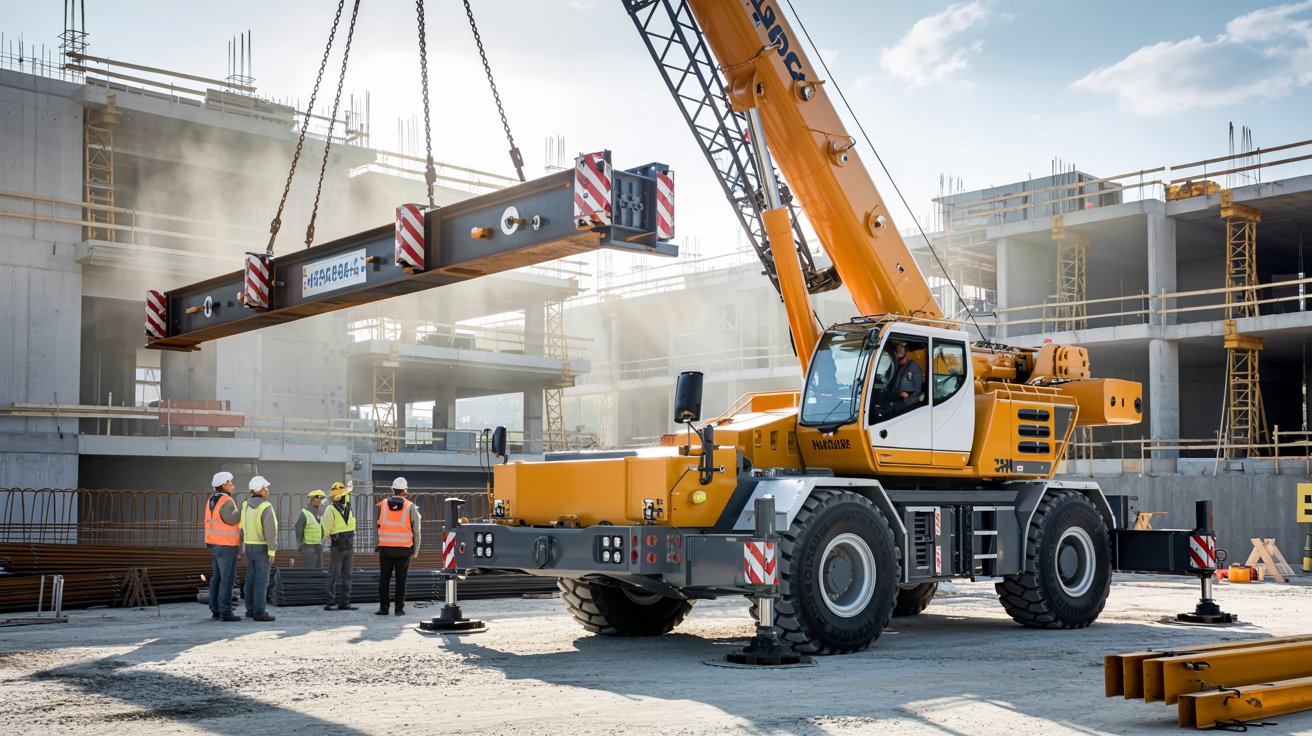
The oil and gas sector also contributes significantly to the growth of the rough terrain crane segment. Exploration sites, drilling operations, pipeline construction, refineries, and petrochemical facilities frequently require lifting equipment capable of operating under harsh environmental conditions. Rough terrain cranes support equipment installation, maintenance, and infrastructure expansion while providing reliable performance across remote and undeveloped locations. Their operational flexibility continues to make them valuable assets for energy infrastructure projects worldwide.
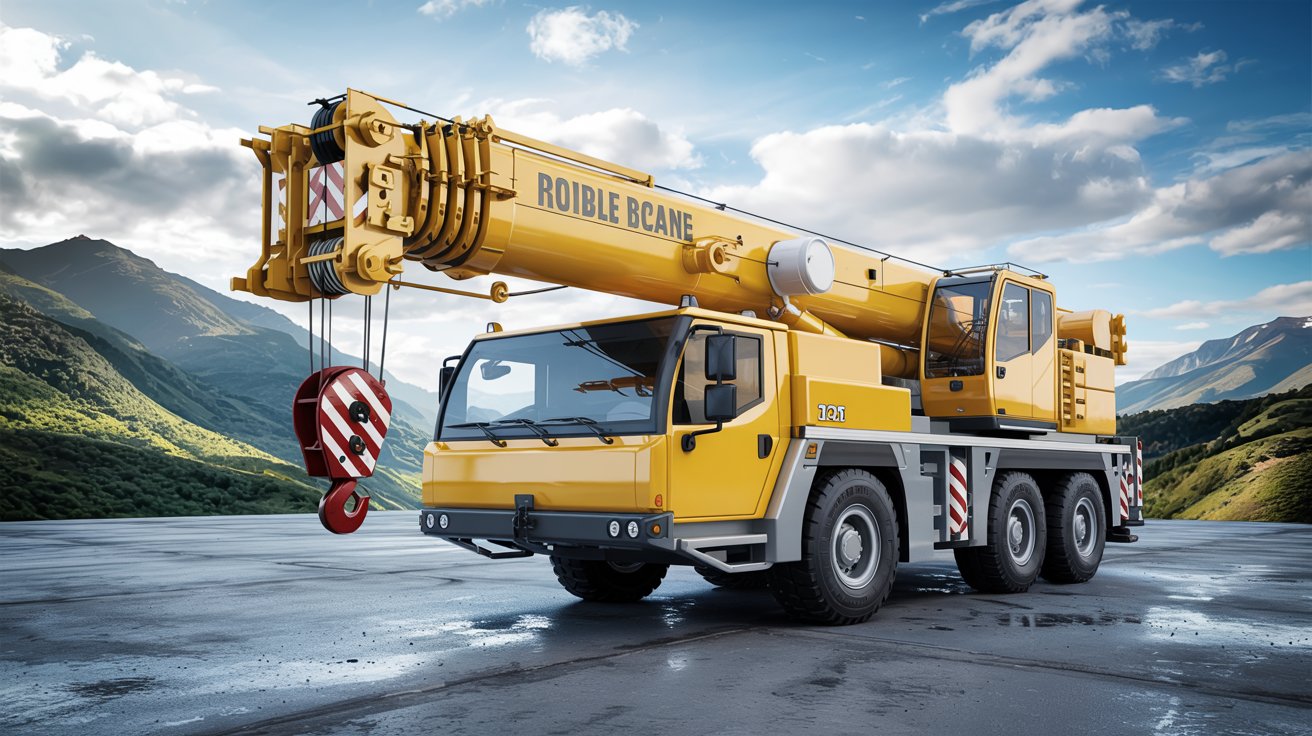
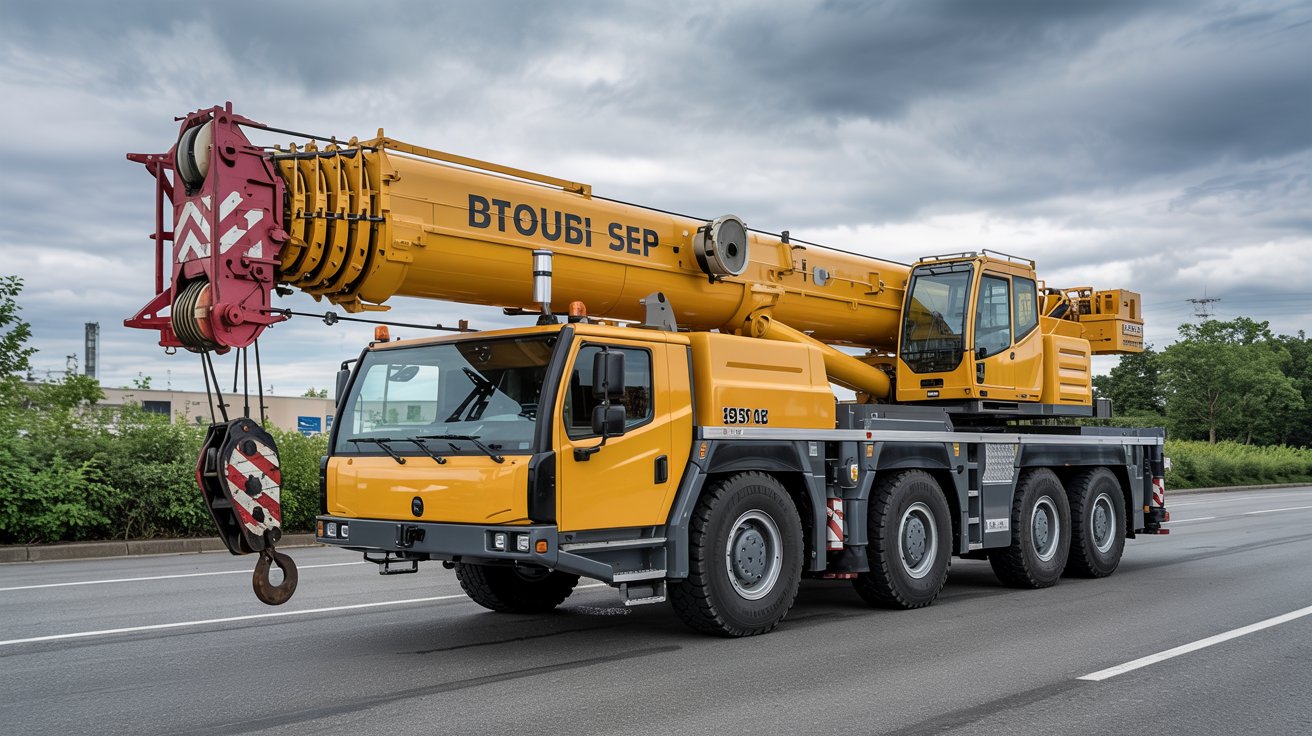
All-terrain cranes occupy one of the most dynamic segments within the mobile hydraulic cranes market due to their combination of highway mobility and exceptional off-road capability. Built with multiple steering axles, sophisticated suspension systems, and powerful hydraulic lifting mechanisms, these cranes are capable of traveling efficiently on public roads while performing effectively across challenging construction environments. Their versatility enables contractors to deploy a single crane across multiple projects without requiring specialized transportation equipment, significantly improving fleet efficiency and reducing logistics costs.
The increasing complexity of modern infrastructure projects is driving demand for all-terrain cranes with higher lifting capacities and extended boom lengths. Large bridge construction projects, wind energy installations, petrochemical facilities, power plants, and industrial manufacturing complexes require cranes capable of lifting extremely heavy components while maintaining excellent mobility. All-terrain cranes are particularly well suited for these applications because they combine the flexibility of mobile equipment with the lifting performance traditionally associated with larger stationary cranes.
Renewable energy development is creating substantial growth opportunities for the all-terrain crane segment. Modern wind turbines continue increasing in size, requiring cranes capable of lifting massive tower sections, nacelles, generators, and rotor blades to considerable heights. All-terrain cranes equipped with advanced telescopic boom systems and computerized load management technologies have become indispensable for wind farm construction. Continued investments in renewable energy infrastructure across Asia Pacific, Europe, and North America are expected to further strengthen demand for these cranes throughout the forecast period.
Inquiry Before Buying @ https://www.marketsandmarkets.com/Enquiry_Before_BuyingNew.asp?id=38642664
Crawler cranes represent another essential segment within the broader mobile hydraulic cranes market, particularly for projects involving extremely heavy lifting requirements and long-duration construction activities. Unlike wheeled cranes, crawler cranes move using continuous tracked undercarriages that distribute equipment weight more evenly across soft or unstable ground. This design provides exceptional stability while allowing cranes to carry heavy loads without requiring outriggers during many lifting operations. Although crawler cranes travel more slowly than wheeled cranes, their superior lifting capacity and stability make them highly valuable for major infrastructure and industrial projects.
Large infrastructure developments frequently depend on crawler cranes for lifting bridge segments, precast concrete components, steel structures, heavy machinery, and industrial process equipment. Their ability to operate safely while carrying substantial loads across challenging ground conditions improves construction productivity while reducing project complexity. Crawler cranes are commonly deployed in dam construction, nuclear power plants, shipyards, large commercial developments, and heavy industrial facilities where sustained lifting operations are required over extended periods.
The renewable energy sector is also contributing to increased crawler crane demand. Utility-scale wind energy projects often require crawler cranes for installing the largest turbine models because of their superior lifting capacity and stability. Offshore wind component manufacturing facilities and port logistics operations similarly utilize crawler cranes to handle oversized equipment before transportation to installation sites. As global wind energy capacity continues expanding, crawler cranes will remain critical for supporting large-scale renewable infrastructure development.
Technological innovation is reshaping all three crane categories through the integration of digital technologies and intelligent control systems. Advanced hydraulic systems deliver smoother and more energy-efficient lifting operations while improving load precision. Computerized load management continuously calculates lifting capacity based on boom configuration, operating radius, and load characteristics, enhancing both safety and operational efficiency. Intelligent hydraulic controls automatically optimize fluid flow according to lifting requirements, reducing fuel consumption while extending component lifespan.
View detailed Table of Content here – https://www.marketsandmarkets.com/Market-Reports/mobile-hydraulic-cranes-market-38642664.html
Artificial intelligence and machine learning are beginning to influence crane operations across rough terrain, all-terrain, and crawler cranes. AI-powered monitoring systems analyze equipment performance, structural loading, hydraulic conditions, and operator behavior to improve lifting efficiency and predict maintenance requirements. Predictive maintenance algorithms identify potential equipment issues before failures occur, minimizing downtime while improving fleet reliability. These intelligent capabilities are becoming increasingly important as contractors seek higher productivity and lower operating costs.
Telematics and cloud-based fleet management systems are also becoming standard features across modern crane fleets. Construction companies can remotely monitor equipment location, operating hours, maintenance schedules, fuel consumption, and utilization rates through connected digital platforms. Fleet managers use this information to optimize crane deployment, improve maintenance planning, and maximize equipment availability across multiple project sites. Digital connectivity is therefore becoming an important competitive advantage for equipment manufacturers and fleet operators alike.
Environmental sustainability continues influencing product development throughout the market. Manufacturers are investing in fuel-efficient engines, hybrid hydraulic systems, lightweight structural materials, and electric-powered crane technologies to reduce emissions while maintaining lifting performance. These environmentally friendly innovations support increasingly stringent environmental regulations while helping contractors reduce operating expenses and achieve sustainability objectives.
Regionally, Asia Pacific remains the largest market for rough terrain, all-terrain, and crawler cranes due to rapid infrastructure development, industrial expansion, renewable energy investments, and urbanization. China leads regional demand through extensive transportation and industrial projects, while India continues expanding highway, metro, renewable energy, and manufacturing infrastructure. North America benefits from infrastructure modernization, mining, and commercial construction activities, while Europe experiences growing demand through renewable energy projects and industrial modernization. The Middle East also remains an important market as governments invest in transportation networks, commercial developments, and energy diversification initiatives.
Looking ahead, the market outlook for rough terrain, all-terrain, and crawler cranes remains highly positive. Infrastructure expansion, renewable energy deployment, industrial development, mining investments, and technological innovation will continue supporting demand across all three crane categories. Rough terrain cranes will maintain their importance in remote construction and energy projects, all-terrain cranes will strengthen their position in versatile heavy lifting applications, and crawler cranes will remain indispensable for the largest infrastructure and industrial developments. Supported by ongoing advances in automation, artificial intelligence, digital monitoring, and sustainable engineering, these crane segments will continue driving the growth and modernization of the global mobile hydraulic cranes market.