
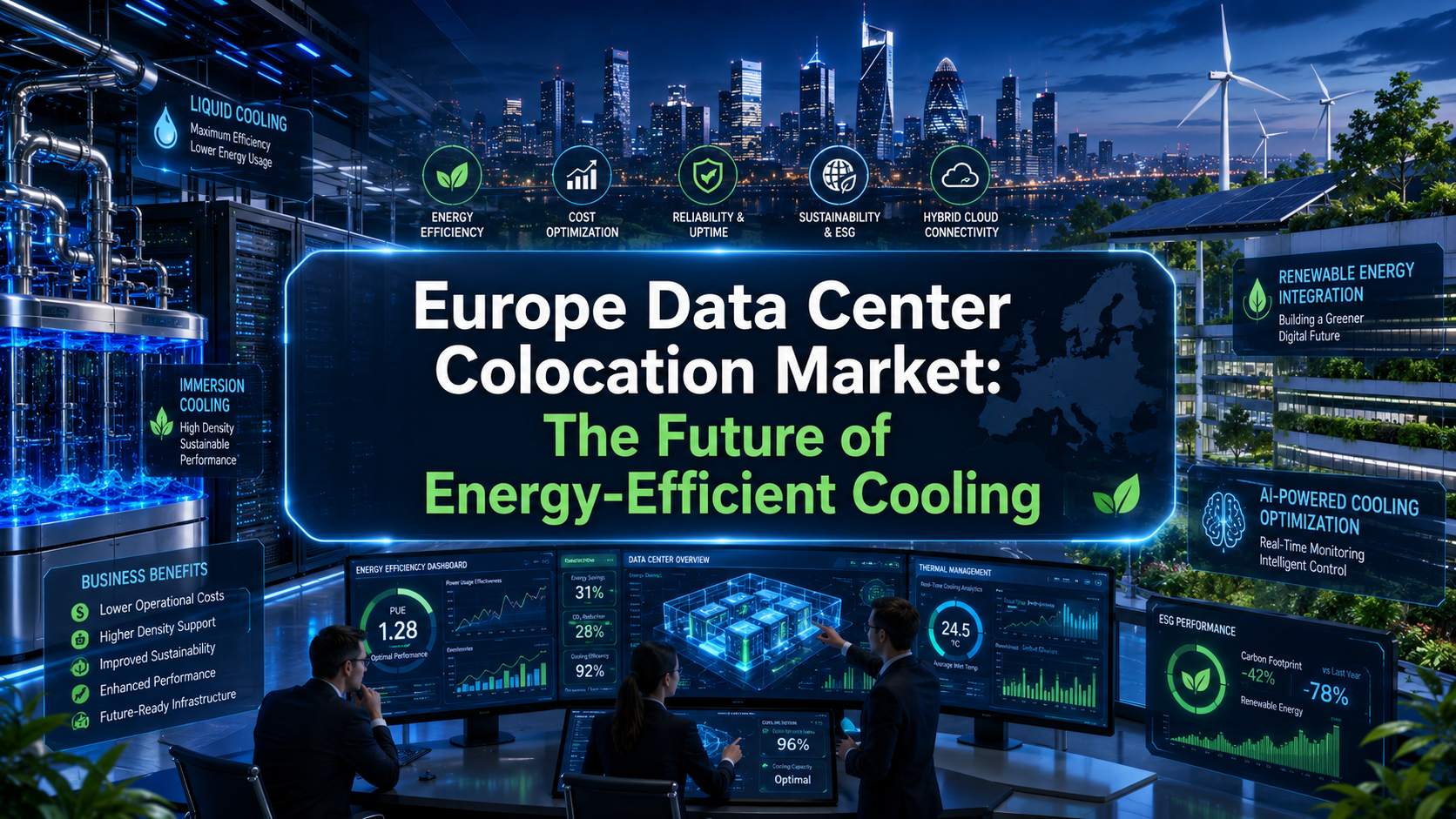
Cooling Has Evolved into a Strategic Infrastructure Imperative
The Europe Data Center Colocation Market is entering a transformative phase as organizations strive to balance sustainability objectives, AI-driven computing demands, operational efficiency, and large-scale digital expansion. As computing workloads continue to intensify, cooling infrastructure has emerged as a critical factor influencing data center performance, operational reliability, energy efficiency, and long-term profitability.
Today, Energy-Efficient Cooling is no longer viewed solely as a facility management function. Instead, it has become a strategic investment that supports business resilience, environmental responsibility, and infrastructure scalability. Enterprises, cloud service providers, financial institutions, healthcare organizations, and technology companies are increasingly prioritizing colocation facilities that deliver superior energy efficiency, optimized operating costs, and measurable sustainability outcomes.
With artificial intelligence adoption accelerating and data volumes growing exponentially, advanced cooling technologies are becoming fundamental to the future of high-performance digital infrastructure.
Why Cooling Has Become a Boardroom-Level Priority
The convergence of digital transformation initiatives, cloud computing, artificial intelligence, and edge computing has significantly increased power densities across modern data center environments.
Conventional cooling methods are increasingly challenged by the demands of:
- High-density AI computing clusters
- GPU-intensive processing environments
- Real-time analytics platforms
- Cloud-native application architectures
- Distributed edge computing deployments
As a result, cooling efficiency now directly affects operational expenditures, business continuity, sustainability performance, and infrastructure scalability. Forward-looking organizations increasingly recognize that cooling strategy is not merely an operational consideration but a critical business decision with enterprise-wide implications.
Discover emerging business opportunities Download the PDF supported by extensive market research.
The Growing Energy Challenge in Modern Data Centers
Data centers remain among the most energy-intensive components of the global digital economy.
Several factors continue to accelerate energy consumption, including:
- Rapid adoption of Artificial Intelligence technologies
- Expansion of cloud-based services
- Exponential growth in enterprise data volumes
- Increasing deployment of edge computing environments
- Continuous demand for always-on digital services
Cooling systems frequently represent a substantial percentage of overall facility energy consumption. Consequently, enhancing cooling efficiency has become one of the most effective approaches for reducing operational costs while minimizing environmental impact.
Discover what’s fuelling successful companies download the Sample Report for your business growth.
Global Technology Trends Driving Cooling Innovation
Several technology trends are redefining cooling strategies throughout the data center industry.
AI Infrastructure Expansion
Artificial Intelligence workloads generate significantly greater thermal output than traditional enterprise applications, creating new cooling requirements.
High-Density Computing
Advanced processors, GPUs, and accelerated computing platforms require innovative cooling technologies to maintain optimal performance and reliability.
Sustainability Initiatives
Organizations are increasingly prioritizing carbon reduction, energy efficiency, and sustainable infrastructure investments as part of broader corporate ESG objectives.
Renewable Energy Integration
Data center operators are aligning cooling operations with renewable energy sources to improve environmental performance and reduce dependence on traditional power generation.
Intelligent Infrastructure Management
AI-powered monitoring and optimization platforms enable real-time adjustments that maximize cooling efficiency and operational performance.
These developments continue to influence emerging Europe Data Center Colocation Trends and shape future infrastructure investment strategies.
Advanced Cooling Technologies Transforming Data Centers
Liquid Cooling
Liquid cooling solutions offer significantly greater heat transfer efficiency compared to conventional air-cooling systems.
Key Advantages
- Enhanced cooling effectiveness
- Lower energy consumption
- Improved support for AI workloads
- Increased rack density capabilities
Immersion Cooling
Immersion cooling technologies submerge servers in specially engineered dielectric fluids, maximizing heat dissipation and operational efficiency.
Key Advantages
- Significant energy savings
- Reduced facility footprint
- Improved computing performance
- Enhanced thermal management
Free Cooling Systems
Free cooling technologies utilize favorable environmental conditions to reduce dependence on mechanical cooling infrastructure.
Key Advantages
- Lower operating expenses
- Reduced carbon emissions
- Improved sustainability metrics
AI-Powered Cooling Optimization
Artificial Intelligence continuously analyzes workload conditions and environmental variables to optimize cooling performance dynamically.
Key Advantages
- Increased operational efficiency
- Reduced energy expenditure
- Enhanced infrastructure reliability
Collectively, these innovations continue contributing to the expanding Europe Data Center Colocation Size and accelerating enterprise adoption across industries.
Europe Data Center Colocation Market Landscape
Europe continues to lead global efforts in sustainable infrastructure development and energy-efficient data center operations.
Several factors are contributing to market expansion:
- Enterprise cloud transformation initiatives
- Significant investments in AI infrastructure
- Stringent sustainability regulations
- Growing ESG commitments
- Expansion of digital services
- Ongoing enterprise modernization programs
Recent Europe Data Center Colocation Analysis indicates that cooling efficiency has become a major differentiator among colocation providers. Organizations increasingly assess facilities based on energy performance, sustainability credentials, operational resilience, and long-term scalability.
Enterprise Applications Across Industries
Financial Services
Applications
- High-frequency trading platforms
- Digital banking ecosystems
- Fraud detection and risk analytics
- Financial transaction processing environments
Business Benefits
- Reduced operating expenses
- Enhanced system reliability
- Improved regulatory compliance
Healthcare
Applications
- Electronic health record systems
- Telemedicine infrastructure
- Medical imaging platforms
- Healthcare analytics environments
Business Benefits
- Increased system availability
- Enhanced patient services
- Stronger data protection capabilities
Manufacturing
Applications
- Industrial IoT ecosystems
- Smart manufacturing operations
- Predictive maintenance platforms
- Supply chain intelligence systems
Business Benefits
- Higher productivity levels
- Reduced operational downtime
- Improved operational visibility
Retail and E-Commerce
Applications
- Omnichannel commerce platforms
- Customer analytics solutions
- Digital payment ecosystems
- Inventory optimization systems
Business Benefits
- Faster transaction processing
- Enhanced customer experiences
- Greater scalability
Technology and Cloud Providers
Applications
- AI service platforms
- Cloud infrastructure environments
- SaaS delivery ecosystems
- Edge computing networks
Business Benefits
- Superior performance
- Improved operational efficiency
- Accelerated innovation cycles
The growing adoption of these solutions continues to strengthen overall Europe Data Center Colocation Share within enterprise digital infrastructure investments.
Business Benefits of Energy-Efficient Cooling
Organizations investing in advanced cooling technologies can realize substantial operational and strategic value.
Reduced Operating Costs
Lower energy consumption directly contributes to improved profitability and cost optimization.
Increased Infrastructure Capacity
Advanced cooling systems support higher-density computing environments without compromising performance.
Enhanced Sustainability Performance
Organizations can accelerate progress toward carbon reduction and environmental objectives.
Improved Reliability
Effective thermal management minimizes equipment failures, downtime, and service disruptions.
Stronger Competitive Positioning
Sustainable infrastructure increasingly influences customer preferences, investor confidence, and corporate reputation.
These benefits are consistently highlighted in leading Europe Data Center Colocation Report findings.
AI Workloads and High-Density Computing Requirements
Artificial Intelligence has emerged as one of the most influential drivers of cooling innovation.
Modern AI environments require:
- High-density power delivery systems
- Advanced thermal management solutions
- Scalable cooling architectures
- Continuous operational availability
Without energy-efficient cooling infrastructure, organizations may encounter performance constraints, increased operating costs, and heightened operational risks.
This trend continues to support strong Europe Data Center Colocation Growth across the region.
Sustainability, ESG, and Regulatory Compliance
Environmental sustainability has become a strategic priority for organizations operating throughout Europe.
Key focus areas include:
- Carbon reduction initiatives
- Energy efficiency improvements
- Renewable energy integration
- ESG reporting and disclosure
- Sustainable operational practices
Energy-efficient cooling solutions support each of these objectives while helping organizations comply with evolving regulatory requirements and environmental standards.
Challenges Facing Data Center Operators
Despite significant progress, several challenges remain.
Rising Power Requirements
Artificial Intelligence and digital transformation initiatives continue driving higher energy consumption.
Infrastructure Modernization Investments
Implementing advanced cooling technologies often requires significant capital expenditures.
Skills and Expertise Gaps
Managing next-generation cooling systems demands specialized technical expertise.
Regulatory Complexity
Organizations must navigate increasingly stringent sustainability and environmental compliance requirements.
Successfully addressing these challenges will be essential for sustaining long-term market growth and competitiveness.
Future Outlook for Cooling Technologies
The next generation of cooling innovation is expected to include:
- AI-driven cooling automation
- Advanced liquid cooling architectures
- Sustainable immersion cooling technologies
- Carbon-neutral cooling operations
- Intelligent thermal management platforms
- Renewable-powered cooling ecosystems
The overall Europe Data Center Colocation Outlook remains highly positive as enterprises continue prioritizing sustainability, AI adoption, and infrastructure modernization initiatives.
Industry experts anticipate strong Europe Data Center Colocation Forecast momentum, supported by ongoing investments in next-generation cooling technologies and energy-efficient infrastructure solutions.
Strategic Recommendations for Technology Leaders
Enterprise and technology leaders should prioritize:
- Investing in energy-efficient cooling infrastructure
- Selecting AI-ready colocation providers
- Aligning infrastructure investments with ESG objectives
- Deploying intelligent monitoring and optimization platforms
- Establishing long-term sustainability roadmaps
- Incorporating cooling efficiency into enterprise infrastructure planning
Organizations that proactively implement these strategies will be better positioned to achieve superior operational performance, sustainability outcomes, and long-term competitive advantages.
Energy-Efficient Cooling is rapidly becoming a defining component of next-generation digital infrastructure. As enterprises expand cloud operations, deploy AI workloads, and pursue sustainability goals, advanced cooling technologies provide the foundation for efficient, resilient, and scalable data center environments.
The continued expansion of the Europe Data Center Colocation Market, supported by increasing Europe Data Center Colocation Size, accelerating Europe Data Center Colocation Growth, evolving Europe Data Center Colocation Trends, comprehensive Europe Data Center Colocation Analysis, a favorable Europe Data Center Colocation Outlook, and a positive Europe Data Center Colocation Forecast, demonstrates that cooling innovation is no longer merely an operational enhancement. It has become a strategic driver of enterprise performance, sustainability leadership, infrastructure resilience, and long-term business success.