
The demand for high-speed, secure, and reliable wireless communication has never been greater. As data traffic continues to surge due to cloud computing, artificial intelligence (AI), the Internet of Things (IoT), smart cities, and emerging 6G networks, traditional radio frequency (RF)-based communication systems are facing increasing challenges related to spectrum congestion, interference, and bandwidth limitations. In response, Free Space Optics and Li-Fi Technologies are emerging as transformative solutions capable of delivering ultra-fast connectivity while addressing many of the limitations associated with conventional wireless networks.
By leveraging light-based communication instead of radio waves, Free Space Optics and Li-Fi Technologies offer unprecedented opportunities for enterprises, governments, telecommunications providers, defense organizations, healthcare institutions, and industrial operators seeking next-generation connectivity solutions. These technologies are increasingly recognized as critical enablers of future digital infrastructure and high-capacity wireless communication ecosystems.
Understanding Free Space Optics and Li-Fi Technologies
Free Space Optics (FSO) is a communication technology that uses light propagating through free space to transmit data between two points without requiring physical fiber-optic cables. FSO systems typically employ laser beams to establish high-bandwidth communication links capable of delivering fiber-like speeds across short and medium distances.
Li-Fi (Light Fidelity), a subset of Visible Light Communication (VLC), utilizes LED lighting systems to transmit data through modulated light signals that are invisible to the human eye. Unlike Wi-Fi, which relies on radio frequency signals, Li-Fi uses visible light, infrared, or ultraviolet wavelengths to facilitate wireless communication.
Together, Free Space Optics and Li-Fi Technologies represent a new generation of optical wireless communication solutions that combine high-speed data transmission, enhanced security, and low-latency performance. The FSO & VLC/Li-Fi market was valued at USD 2.78 billion in 2024 and is projected to reach USD 7.39 billion by 2029, growing at a CAGR of 21.6% from 2024 to 2029.
Why the Need for Alternative Wireless Technologies Is Growing
The global digital economy continues to place immense pressure on existing communication infrastructure. As connected devices multiply and bandwidth-intensive applications become mainstream, network operators face growing challenges in maintaining service quality and performance.
Several factors are driving interest in Free Space Optics and Li-Fi Technologies:
- Increasing spectrum scarcity in RF communications
- Rising demand for high-speed wireless data transmission
- Growth of smart city infrastructure projects
- Expansion of Industry 4.0 and Industrial IoT deployments
- Growing cybersecurity concerns
- Demand for low-latency communication networks
- Development of future 6G communication architectures
These trends have accelerated investments in optical wireless communication systems capable of supplementing or replacing traditional wireless technologies in specific applications.
Download PDF Brochure @ https://www.marketsandmarkets.com/pdfdownloadNew.asp?id=946
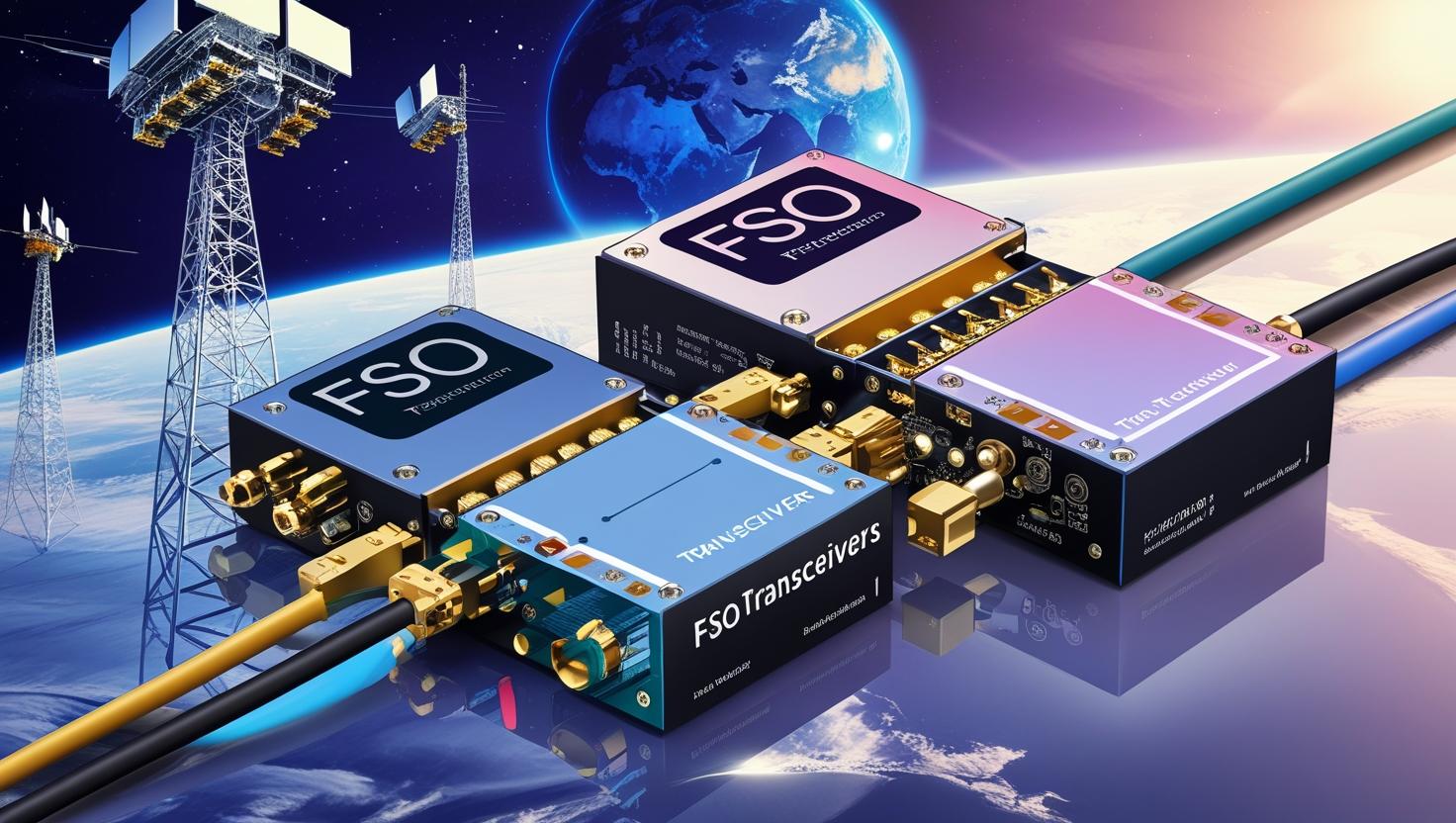
Key Advantages of Free Space Optics and Li-Fi Technologies
Exceptional Data Transfer Speeds
One of the primary advantages of Free Space Optics and Li-Fi Technologies is their ability to deliver significantly higher data transmission rates compared to conventional wireless systems.
FSO systems can provide gigabit-level connectivity similar to fiber-optic networks without the need for expensive trenching or cable deployment. Similarly, Li-Fi technology can achieve multi-gigabit speeds using existing lighting infrastructure, making it an attractive solution for bandwidth-intensive environments.
Enhanced Security
Security remains a top priority for organizations operating in highly sensitive sectors. Unlike radio frequency signals, optical communication systems are inherently more secure because light-based signals are confined to specific transmission paths and are difficult to intercept.
This security advantage makes Free Space Optics and Li-Fi Technologies particularly attractive for defense, financial services, government agencies, and healthcare organizations that handle sensitive information.
Reduced Electromagnetic Interference
Traditional wireless networks often face interference issues in environments with dense electronic equipment. Since optical communication does not generate radio frequency emissions, Free Space Optics and Li-Fi Technologies can operate effectively in locations where RF interference poses operational challenges.
Hospitals, aircraft cabins, industrial facilities, and research laboratories are increasingly exploring these solutions to ensure reliable connectivity without disrupting sensitive equipment.
Spectrum Availability
Radio frequency spectrum is becoming increasingly crowded. In contrast, the visible light spectrum offers a vast, largely untapped communication resource. By utilizing this abundant spectrum, Free Space Optics and Li-Fi Technologies help alleviate congestion while supporting higher network capacity.
Applications Transforming Multiple Industries
Telecommunications and 6G Networks
Telecommunication operators are investigating Free Space Optics and Li-Fi Technologies as critical components of future 6G infrastructure. FSO systems can provide high-capacity backhaul connectivity between network nodes, while Li-Fi can support ultra-dense indoor communication environments.
These technologies offer operators flexible deployment options while reducing dependence on traditional RF spectrum resources.
Smart Cities
Smart city initiatives require extensive connectivity across transportation systems, public infrastructure, surveillance networks, and environmental monitoring platforms.
Free Space Optics and Li-Fi Technologies can support these requirements by enabling high-speed communication links between buildings, streetlights, traffic systems, and IoT devices. Their ability to integrate with existing lighting infrastructure further enhances their value within smart urban environments.
Healthcare Facilities
Hospitals require secure and interference-free communication networks to support medical equipment, patient monitoring systems, and digital healthcare applications.
Li-Fi systems can provide reliable wireless connectivity without generating electromagnetic interference, making them suitable for sensitive healthcare environments. As a result, Free Space Optics and Li-Fi Technologies are gaining attention within modern healthcare facilities seeking advanced communication capabilities.
Industrial Automation
Industry 4.0 initiatives rely heavily on real-time data exchange between machines, sensors, and control systems. Manufacturing facilities require low-latency communication networks capable of supporting autonomous operations and predictive maintenance systems.
Free Space Optics and Li-Fi Technologies offer industrial operators high-speed communication solutions that improve operational efficiency while enhancing network security and reliability.
Defense and Aerospace
Military and aerospace organizations require secure communication systems capable of operating in challenging environments. The directional nature of optical communication provides enhanced protection against interception and jamming attempts.
Consequently, defense agencies worldwide are evaluating Free Space Optics and Li-Fi Technologies for tactical communication, surveillance, and mission-critical applications.
Challenges Facing Market Adoption
Despite their significant advantages, Free Space Optics and Li-Fi Technologies face several challenges that may impact widespread adoption.
FSO systems can be affected by adverse weather conditions such as fog, heavy rain, and dust, which may reduce signal performance. Similarly, Li-Fi requires line-of-sight communication and may experience limitations when physical obstacles block transmission paths.
However, ongoing advancements in adaptive optics, hybrid communication architectures, beam-steering technologies, and intelligent network management systems are helping address these challenges.
Industry stakeholders continue to invest in research and development efforts aimed at improving reliability, scalability, and deployment flexibility.
The Future of Optical Wireless Communication
The future outlook for Free Space Optics and Li-Fi Technologies remains highly promising. As organizations seek alternatives to congested radio frequency networks, optical wireless communication is expected to play an increasingly important role in next-generation connectivity ecosystems.
Emerging technologies such as artificial intelligence, edge computing, autonomous vehicles, digital twins, and immersive extended reality applications will require communication networks capable of supporting massive data volumes with minimal latency. Optical wireless systems are well-positioned to meet these evolving requirements.
Furthermore, government initiatives promoting digital infrastructure modernization and smart city development are likely to accelerate investment in optical communication technologies worldwide.
As the digital economy continues to evolve, the limitations of traditional wireless communication systems are becoming increasingly apparent. Free Space Optics and Li-Fi Technologies offer a compelling alternative by delivering high-speed, secure, and spectrum-efficient connectivity solutions capable of supporting future communication demands.
From telecommunications and healthcare to industrial automation, defense, and smart cities, these technologies are transforming how data is transmitted and managed across modern networks. With continued innovation and increasing commercial adoption, Free Space Optics and Li-Fi Technologies are poised to become foundational pillars of next-generation wireless connectivity, helping organizations unlock new levels of performance, efficiency, and digital transformation