
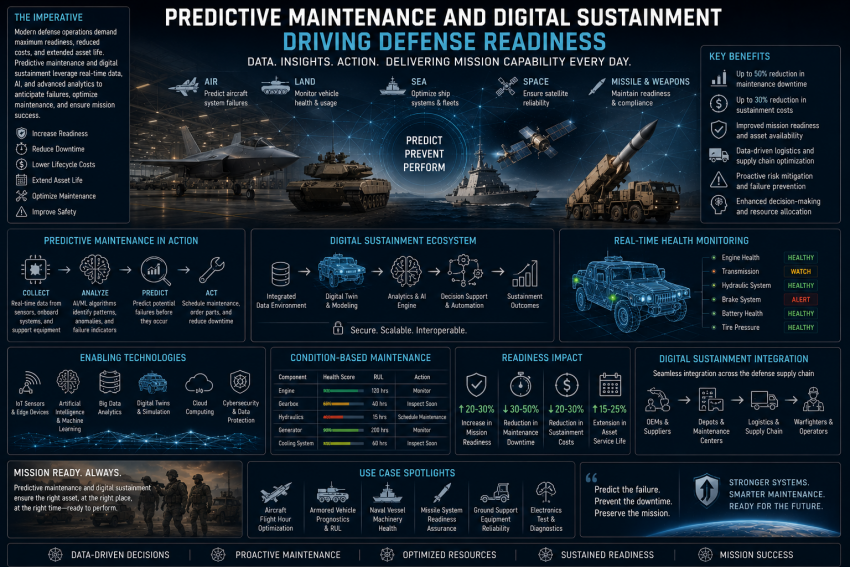
Modern military forces are operating in an increasingly complex strategic environment where operational readiness, mission availability, and rapid response capability have become critical national defense priorities. As global defense systems grow more technologically advanced, traditional maintenance approaches based on scheduled inspections and reactive repairs are no longer sufficient to support high-tempo military operations. In response, defense organizations worldwide are rapidly adopting predictive maintenance and digital sustainment technologies to improve fleet readiness, reduce lifecycle costs, and enhance battlefield effectiveness.
Predictive maintenance combines artificial intelligence, machine learning, advanced sensors, big data analytics, and digital twin technologies to monitor the real-time condition of military assets and forecast failures before they occur. This shift from reactive maintenance to condition-based sustainment is fundamentally transforming how armed forces manage aircraft, naval vessels, armored vehicles, missile systems, and defense infrastructure. Governments and defense contractors increasingly recognize digital sustainment as a strategic capability that directly influences combat readiness and operational superiority.
One of the major drivers behind predictive maintenance adoption is the growing complexity of modern defense platforms. Fifth-generation fighter aircraft, autonomous systems, advanced radar networks, and integrated combat platforms generate enormous amounts of operational data during missions. Embedded sensors continuously monitor engine performance, structural stress, vibration levels, hydraulic systems, thermal conditions, and electronic subsystems. Advanced analytics platforms process this data to identify anomalies, predict component degradation, and recommend maintenance actions before failures impact mission operations.
Download Free Sample of Report: https://www.marketsandmarkets.com/pdfdownloadNew.asp?id=155479010
Military aviation has become one of the largest adopters of predictive sustainment technologies. Fighter jets, transport aircraft, helicopters, and unmanned aerial vehicles require extremely high operational availability while operating in harsh and unpredictable environments. Traditional maintenance models often result in unnecessary inspections or unexpected equipment failures that reduce fleet availability. Predictive maintenance systems powered by AI and digital diagnostics enable defense operators to optimize maintenance schedules based on actual equipment health rather than fixed service intervals. This improves aircraft mission readiness while reducing maintenance downtime and spare part consumption.
Digital twins are becoming a key pillar of next-generation military sustainment strategies. A digital twin is a virtual representation of a physical asset that continuously receives operational and sensor data from real-world systems. These digital models simulate equipment performance, structural fatigue, environmental exposure, and operational stress in real time. Defense organizations use digital twins to predict maintenance needs, optimize component replacement cycles, and conduct mission planning simulations. Digital twin technologies are particularly valuable for expensive military assets such as submarines, combat aircraft, and missile defense systems where maintenance efficiency directly impacts strategic readiness.
Naval defense platforms are also experiencing major transformation through predictive sustainment systems. Warships, aircraft carriers, and submarines operate for extended durations under severe environmental conditions where equipment reliability is essential. Predictive analytics platforms integrated into naval propulsion systems, power distribution networks, and onboard electronics can detect performance anomalies long before equipment failure occurs. This enables maintenance crews to address issues proactively during scheduled maintenance windows rather than during active deployments. As naval fleets increasingly integrate autonomous systems and advanced sensors, digital sustainment capabilities are becoming essential for mission continuity and fleet survivability.
The rise of autonomous military systems is further accelerating demand for intelligent sustainment technologies. Autonomous drones, robotic ground vehicles, and unmanned maritime platforms depend heavily on real-time diagnostics and predictive health monitoring to maintain operational effectiveness. Since many autonomous systems operate in remote or contested environments, predictive maintenance helps minimize mission interruptions and supports greater operational autonomy. AI-enabled health monitoring systems can automatically identify faults, recommend corrective actions, and even coordinate logistics support with minimal human intervention.
Supply chain optimization is another critical advantage of digital sustainment frameworks. Military logistics networks often face challenges related to spare part shortages, procurement delays, and inventory inefficiencies. Predictive maintenance systems improve forecasting accuracy by identifying future component failures before they occur. This allows defense organizations to optimize spare part inventories, reduce excess stockpiling, and improve supply chain responsiveness. AI-driven logistics platforms can prioritize maintenance resources and allocate repair assets based on mission-critical operational requirements.
Cybersecurity and data integration remain important considerations in defense digital sustainment programs. Modern predictive maintenance systems rely heavily on connected sensors, cloud infrastructure, and networked operational platforms. Protecting sensitive military data from cyber threats is therefore essential. Defense agencies are investing in secure digital architectures, encrypted communication systems, and resilient military cloud environments to safeguard operational sustainment data. Secure interoperability between legacy systems and modern AI-driven analytics platforms is also becoming a priority for defense modernization initiatives.
Artificial intelligence is playing a rapidly expanding role in defense sustainment operations. Machine learning algorithms can analyze vast datasets from multiple platforms simultaneously, enabling faster and more accurate fault prediction than traditional maintenance methods. AI-powered systems can detect hidden patterns in operational data that human analysts may overlook. As military datasets continue to expand, AI will increasingly automate diagnostic analysis, maintenance scheduling, and sustainment decision-making processes. This evolution is expected to significantly improve defense operational efficiency while reducing manpower burdens on maintenance personnel.
The economic impact of predictive maintenance adoption is substantial. Military equipment maintenance represents a significant portion of defense operating budgets, particularly for aging fleets and high-performance systems. Reactive maintenance often leads to expensive emergency repairs, mission delays, and reduced equipment lifespan. Predictive sustainment minimizes unplanned downtime, improves component longevity, and reduces lifecycle support costs. Defense organizations are increasingly viewing digital sustainment investments as cost-saving initiatives that simultaneously enhance operational capability.
Global defense modernization programs are accelerating investments in digital sustainment infrastructure. The United States, European NATO members, and Indo-Pacific defense powers are prioritizing AI-enabled readiness systems as part of broader military transformation strategies. Defense contractors are developing integrated sustainment ecosystems that combine cloud computing, predictive analytics, IoT-enabled sensors, augmented reality maintenance tools, and advanced logistics management platforms. These technologies are expected to define the future of military readiness over the next decade.
Predictive maintenance and digital sustainment are no longer optional capabilities for modern armed forces. They are becoming strategic enablers of operational readiness, mission success, and long-term defense resilience. As military platforms become more sophisticated and operational demands continue to intensify, intelligent sustainment systems will play a decisive role in ensuring that defense forces remain mission-ready in increasingly contested global environments.