
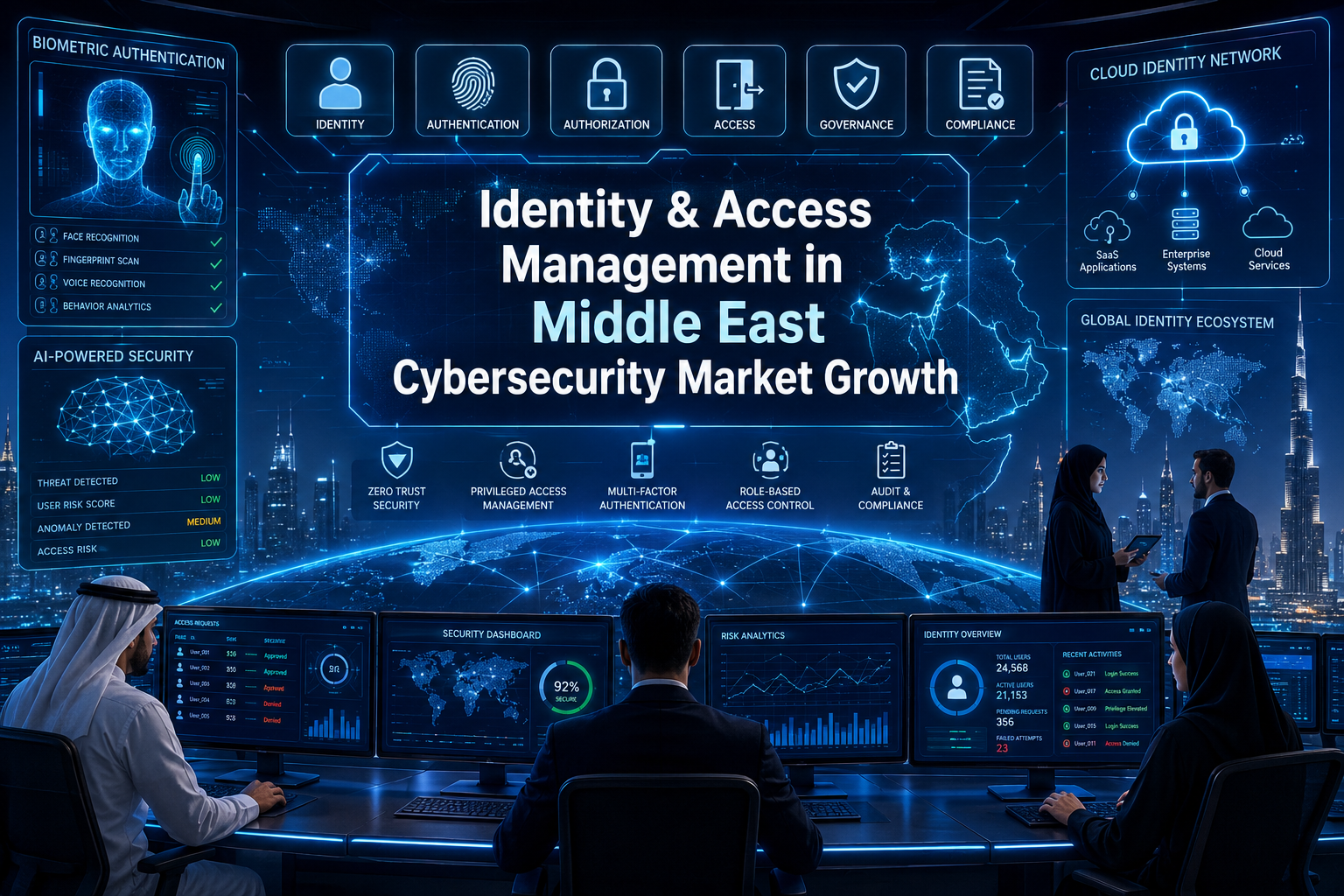
The Rise of Digital Identity Security
In today’s highly interconnected digital landscape, Identity & Access Management (IAM) has emerged as a foundational pillar of enterprise cybersecurity. As organizations accelerate cloud adoption, embrace remote work models, and advance digital transformation initiatives, identity is increasingly recognized as the new security perimeter.
Within this evolving environment, the Middle East Cybersecurity Market is experiencing significant growth, driven by regulatory advancements, digital economy initiatives, and a surge in cyber threats targeting critical infrastructure. Enterprises across the region are prioritizing IAM solutions to safeguard digital identities, protect sensitive information, and ensure compliance with dynamic cybersecurity regulations.
Why Identity & Access Management is the New Security Perimeter
Conventional perimeter-based security frameworks are no longer adequate in addressing modern cybersecurity challenges. With the rise of distributed workforces and cloud-first strategies, organizations must transition toward identity-centric security models.
IAM enables enterprises to:
- Ensure secure user authentication
- Enforce controlled access to mission-critical systems
- Continuously monitor and audit user activities
- Mitigate risks of unauthorized data access
This approach aligns closely with Zero Trust Architecture, where no user or system is inherently trusted without verification.
Market research indicates strong trends Download the PDF to uncover business insights.
Middle East Cybersecurity Market: Strategic Context
The Middle East Cybersecurity Market share is expanding at a robust pace, supported by increased investments in smart city initiatives, fintech innovation, and national digital transformation agendas. Leading economies such as the UAE and Saudi Arabia are driving this evolution through progressive cybersecurity regulations and strategic innovation programs.
Key factors influencing the Middle East Cybersecurity Market size include:
- Escalating cyber threats across oil & gas, banking, and government sectors
- Rapid adoption of cloud-native security infrastructures
- Increased enterprise spending on identity-centric security solutions
Comprehensive Middle East Cybersecurity Market analysis highlights IAM as a critical enabler of enterprise resilience and risk mitigation.
Core Components of Identity & Access Management
IAM integrates multiple essential technologies that collectively strengthen enterprise security frameworks:
- Authentication Systems
Validate user identities using passwords, biometrics, and multi-factor authentication (MFA). - Authorization Mechanisms
Define and enforce access privileges based on roles, policies, and organizational hierarchy. - Identity Governance
Manage identity lifecycle processes, including provisioning, de-provisioning, and compliance oversight. - Privileged Access Management (PAM)
Secure and monitor access to high-risk administrative accounts. - Single Sign-On (SSO)
Streamline user access while maintaining strong security controls.
This Sample Report is designed to fuel your business growth download it today.
Latest Global Technology Trends in IAM (2026 Outlook)
The global IAM landscape is undergoing rapid transformation, significantly influencing Middle East Cybersecurity Market trends:
- Zero Trust Security Adoption
Enterprises are implementing identity-first security models to eliminate implicit trust. - AI-Driven Identity Analytics
Advanced analytics and machine learning are enhancing threat detection and behavioral insights. - Passwordless Authentication
Biometric and token-based authentication methods are replacing traditional credentials. - Decentralized Identity (Blockchain-Based)
Empowering users with greater control over their digital identities. - Cloud-Native IAM Platforms
Modern, scalable IAM solutions are replacing legacy infrastructures.
These advancements are shaping the Middle East Cybersecurity Market outlook, reinforcing IAM as a strategic investment priority.
Enterprise Applications Across Industries
IAM delivers critical value across multiple industry verticals:
Banking & Financial Services
- Strengthening fraud prevention mechanisms
- Enabling secure digital banking experiences
- Supporting regulatory compliance
Healthcare
- Protecting sensitive patient data
- Securing access to clinical systems
Government & Public Sector
- Facilitating citizen identity management
- Enhancing national cybersecurity frameworks
Retail & E-Commerce
- Safeguarding customer identities
- Delivering personalized and secure user experiences
Energy & Utilities
- Protecting critical infrastructure
- Securing operational technology (OT) environments
These use cases are key contributors to Middle East Cybersecurity Market growth.
IAM in Middle East Cybersecurity Market Growth Strategy
IAM serves as a strategic cornerstone within the Middle East Cybersecurity Market report, empowering both governments and enterprises to:
- Strengthen digital trust frameworks
- Align with national cybersecurity strategies
- Improve resilience against evolving cyber threats
- Enable secure and scalable digital transformation
The Middle East Cybersecurity Market forecast identifies IAM as one of the fastest-growing segments, driven by its direct impact on enterprise-wide security posture.
Benefits for Enterprises and Organizations
Organizations implementing IAM solutions realize substantial business and security benefits:
- Enhanced Security Posture
Minimizes risks related to unauthorized access and insider threats. - Regulatory Compliance
Ensures alignment with data protection regulations and industry standards. - Operational Efficiency
Automates identity lifecycle processes, reducing administrative overhead. - Improved User Experience
Enables seamless access through SSO and adaptive authentication. - Scalability
Supports dynamic, cloud-based, and hybrid IT environments.
Challenges and Risk Considerations
Despite its advantages, IAM deployment presents several challenges:
- Integration complexities with legacy systems
- Managing identities across diverse platforms
- High initial implementation costs
- Resistance to adoption of new authentication methods
A structured and phased implementation strategy is essential to address these challenges effectively.
Future Outlook: Identity-First Security Architecture
The future of cybersecurity is firmly anchored in identity-first approaches. The Middle East Cybersecurity Market outlook indicates:
- Increased adoption of biometric authentication technologies
- Expansion of AI-driven identity intelligence capabilities
- Integration with IoT and edge computing ecosystems
- Growth of identity-as-a-service (IDaaS) solutions
IAM will continue to play a pivotal role in enabling secure, scalable digital ecosystems.
Strategic Recommendations for Business Leaders
To maximize the value of IAM investments, organizations should:
- Implement Zero Trust security frameworks
- Leverage AI-driven identity intelligence
- Balance security with user experience
- Align IAM initiatives with broader business objectives
- Continuously monitor and optimize identity governance
Building Trust in a Zero-Trust World
As cyber threats grow increasingly sophisticated, Identity & Access Management has become a critical business imperative. The expansion of the Middle East Cybersecurity Market highlights the growing importance of identity-centric security frameworks in supporting digital transformation, safeguarding enterprise assets, and establishing trust.
Organizations that prioritize IAM strategically will not only strengthen their security posture but also unlock new avenues for innovation, operational excellence, and sustainable growth.