
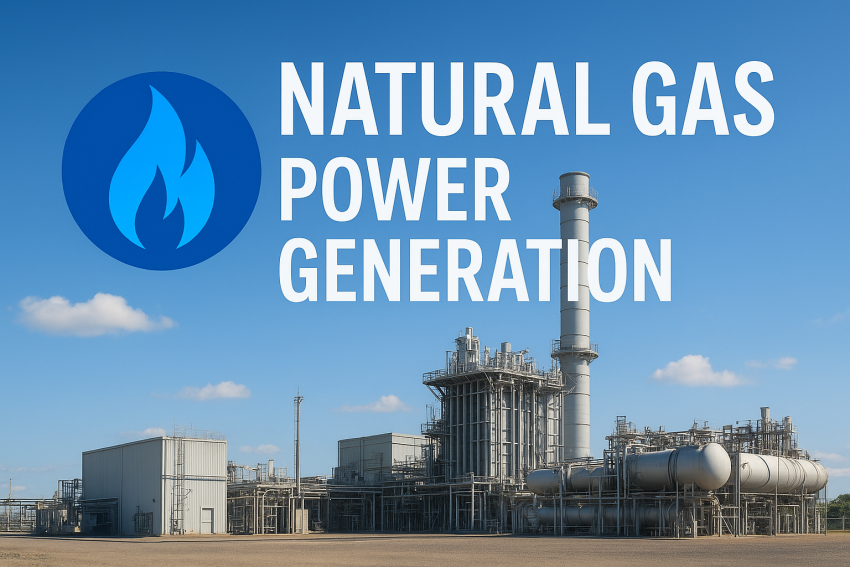
According to a report, titled “Natural Gas Power Generation Market by Technology (Combined Cycle, Open Cycle, Cogeneration), End User (Power Utilities, Industrial, Residential & Commercial), Fuel Source (Pipeline, Liquefied), Power Output, and Region – Global Forecast to 2030″, published by MarketsandMarkets, the Natural Gas Power Generation market size is projected to grow from USD 96.95 billion in 2025 to USD 122.49 billion by 2030, registering a CAGR of 4.8% during the forecast period. This Natural Gas Power Generation forecast reflects steady momentum driven by rising electricity demand, the global transition from coal to cleaner fuels, and expanding LNG infrastructure worldwide.
The Natural Gas Power Generation market is undergoing significant transformation as governments and utilities face increasing pressure to reduce carbon emissions while ensuring energy security and grid reliability. The growing deployment of high-efficiency combined-cycle gas turbine (CCGT) plants, coupled with rapid industrialization and urbanization in emerging economies, is accelerating investments in gas-fired power capacity, positively influencing Natural Gas Power Generation growth. These platforms enable utilities to manage baseload and peak-load demands, support renewable energy integration, and comply with evolving environmental and regulatory standards.
Download PDF Brochure @ https://www.marketsandmarkets.com/pdfdownloadNew.asp?id=131646934
Advancements in digital technologies such as IoT, AI, and predictive analytics are shaping evolving Natural Gas Power Generation trends. Furthermore, the integration of natural gas with renewable energy systems and the emergence of hydrogen co-firing and carbon capture technologies are improving long-term sustainability. Regional expansion across Asia Pacific, North America, and the Middle East continues to strengthen the overall Natural Gas Power Generation outlook, with Asia Pacific emerging as the fastest-growing region during the forecast period.
By Technology, Combined Cycle Segment to Account for Largest Market Share in 2025, Driven by Superior Thermal Efficiency and Lower Emissions
Within the Natural Gas Power Generation analysis, the combined cycle segment holds the largest market share, driven by its superior thermal efficiency, ability to utilize both gas and steam turbines, and significantly reduced greenhouse gas emissions compared to conventional generation methods. These plants are increasingly being designed as hydrogen-ready, further reinforcing their role in future low-carbon energy systems, contributing to overall Natural Gas Power Generation growth.
Combined cycle plants play a critical role in supporting the integration of intermittent renewable energy sources such as wind and solar, ensuring grid stability while meeting rising electricity demand. Open cycle plants remain vital for peaking power applications and emergency backup, while cogeneration systems are gaining traction in industrial facilities for simultaneous electricity and heat generation. The adoption of digital twin technology and predictive maintenance solutions is further enhancing the efficiency and reliability across all three technology segments.
The integration of hydrogen co-firing and carbon capture and storage (CCS) capabilities is further strengthening demand for next-generation combined cycle solutions, enabling utilities to derive long-term value and future-proof their infrastructure. As modernization initiatives accelerate globally, technology providers offering flexible, low-emission, and digitally integrated solutions are expanding their Natural Gas Power Generation share, positioning the combined cycle segment as the market leader.
Power Utilities Segment to Account for Largest Market Share by End-Use Application in 2025, Driven by Rising Demand for Reliable Baseload Capacity and Renewable Integration Support
The power utilities segment holds the largest Natural Gas Power Generation share in 2025, driven by its critical role in providing reliable baseload and mid-merit power to complement intermittent renewable energy sources. With increasing deployment of grid-scale renewable capacity, utilities require highly flexible and scalable gas-fired systems capable of rapid response to demand fluctuations, reinforcing the Natural Gas Power Generation size expansion.
Advanced gas plants support diverse grid requirements through multi-mode operations, enabling utilities to manage peak loads, prevent outages, and enhance overall grid resilience. Regulatory mandates emphasizing carbon reduction, energy security, and system reliability are further accelerating adoption, as highlighted in the Natural Gas Power Generation report.
The industrial sector is showing strong adoption of captive natural gas plants, particularly in energy-intensive industries such as steel, cement, and chemicals. Meanwhile, the residential and commercial segment benefits from growing distributed generation, microgrids, and small-scale combined heat and power (CHP) units, which improve energy efficiency and resilience in urban areas, aligning with evolving Natural Gas Power Generation trends. As utilities focus on decarbonization pathways while maintaining grid stability, this segment continues to dominate the overall Natural Gas Power Generation outlook.
Top Companies in the Natural Gas Power Generation Market
- GE Vernova
- Siemens Energy
- Mitsubishi Heavy Industries, Ltd.
- Wärtsilä
- Ansaldo Energia
- Tecogen, Inc.
- Destinus Energy
- Bechtel Corporation
- Fluor Corporation
- Worley
- Caterpillar
- McDermott
- Clarke Energy
- Burns & McDonnell
- Calpine
Accelerate your business growth by accessing our free sample report
Asia Pacific is Set to Become the Fastest-Growing Region Over the Forecast Period, Fueled by Rising Electricity Demand, LNG Import Expansion, and the Transition from Coal
Asia Pacific is projected to register the highest Natural Gas Power Generation growth during the forecast period, driven by rapid industrialization, large-scale energy demand growth, and the accelerating transition away from coal. Countries such as China, Japan, South Korea, and Indonesia are investing significantly in high-efficiency combined-cycle gas turbine (CCGT) plants, LNG import terminals, and hydrogen-ready infrastructure, positively impacting the Natural Gas Power Generation forecast.
China’s push to curb coal dependency and India’s initiatives to expand gas-based power capacity are creating robust opportunities for technology providers and utilities. The region is also becoming a global hotspot for LNG-to-power projects, particularly in Southeast Asia, where domestic gas resources are limited but energy demand is soaring. The development of floating storage and regasification units (FSRUs) is enabling quicker deployment of LNG-based generation capacity, supporting improved energy security and supply diversification, further strengthening the Natural Gas Power Generation outlook.
Additionally, government-backed clean energy initiatives focused on carbon reduction and grid modernization are accelerating adoption of advanced gas power systems across the region. As a result, Asia Pacific continues to expand its Natural Gas Power Generation size, positioning itself as the fastest-growing regional market globally.