
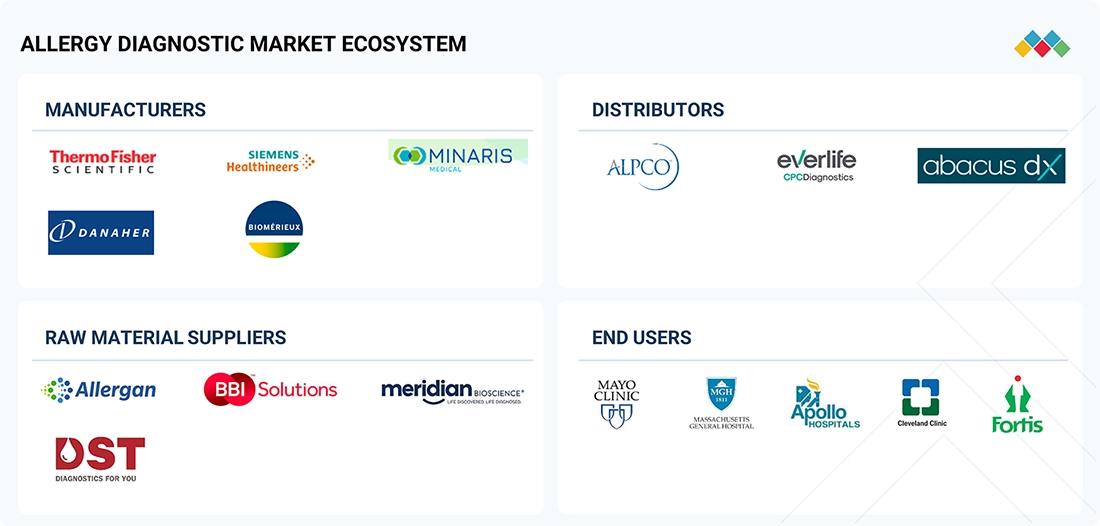
The global allergy diagnostics market is experiencing significant growth, fueled by the rising prevalence of allergic diseases such as asthma, rhinitis, food allergies, and skin conditions. Increasing awareness, advancements in diagnostic technologies, and the growing demand for personalized medicine are further accelerating market expansion. A critical aspect shaping this competitive landscape is the presence of several key players who are continuously innovating to improve diagnostic accuracy and efficiency.
The global Allergy Diagnostics market, valued at USD 6.23 billion in 2025, stood at USD 6.80 billion in 2026 and is projected to advance at a resilient CAGR of 9.6% from 2026 to 2031, culminating in a forecasted valuation of USD 10.77 billion by the end of the period. Healthcare systems worldwide are shifting from reactive to preventive care models, recognizing that early identification of health risks reduces long-term costs and improves patient outcomes.
Allergy diagnostics fit squarely into this paradigm by enabling early detection of sensitization before severe clinical manifestations occur. Routine allergy screening, particularly in high-risk populations such as children with a family history of atopy or individuals living in polluted urban areas, enables interventions that prevent disease progression, such as environmental control measures, allergen avoidance, and early immunotherapy. Public health campaigns and school health programs increasingly include allergy awareness and screening components, especially for food allergies that can pose acute risks. Preventive check-ups for occupational allergies in industries with high exposure to sensitizers (e.g., healthcare, agriculture, chemical manufacturing) are also gaining traction, driving demand for standardized diagnostic panels.
Insurers and payers encouraging preventive services through coverage incentives further bolster utilization, as early diagnosis can reduce emergency visits and chronic therapy costs associated with unmanaged allergies. This alignment between healthcare policy and population health strategies reinforces diagnostics as an integral part of preventive care, scaling the market beyond symptomatic treatment and toward holistic long-term health management.
Download PDF Brochure @ https://www.marketsandmarkets.com/pdfdownloadNew.asp?id=232871701
1. Thermo Fisher Scientific Inc.
Thermo Fisher Scientific is a dominant player in the allergy diagnostics market. Its ImmunoCAP system is widely recognized as a gold standard for in vitro allergy testing. The company offers a broad portfolio of allergen-specific IgE blood tests that deliver highly accurate and reproducible results.
Thermo Fisher’s strong global presence, continuous investment in R&D, and expansion strategies make it a leader in allergy diagnostics.
2. Danaher Corporation (Beckman Coulter)
Danaher Corporation, through its subsidiary Beckman Coulter, plays a crucial role in clinical diagnostics, including allergy testing. Beckman Coulter provides advanced immunoassay systems that support allergy detection with high sensitivity and efficiency.
Their focus on automation and laboratory workflow optimization enhances diagnostic productivity across healthcare settings.
3. Siemens Healthineers AG
Siemens Healthineers is another major contributor to the allergy diagnostics market. The company offers robust immunoassay platforms that facilitate reliable allergy testing in laboratories worldwide.
Its emphasis on digitalization and integrated diagnostic solutions helps streamline allergy diagnostics and improve patient outcomes.
4. bioMérieux SA
bioMérieux specializes in in vitro diagnostics and has a growing footprint in allergy testing. The company focuses on innovative diagnostic solutions, including immunoassays and molecular diagnostics.
bioMérieux’s commitment to research and development enables it to introduce advanced technologies that enhance diagnostic precision.
Request Sample Pages@ https://www.marketsandmarkets.com/requestsampleNew.asp?id=232871701
5. Omega Diagnostics Group PLC
Omega Diagnostics Group is known for its allergy testing kits and point-of-care diagnostic solutions. The company offers a range of products designed to detect food and respiratory allergies efficiently.
Its focus on cost-effective and rapid diagnostic solutions makes it particularly relevant in emerging markets.
6. Stallergenes Greer
Stallergenes Greer is a global leader in allergy immunotherapy and diagnostics. The company provides a wide range of allergy testing products, including skin prick test solutions and allergen extracts.
Stallergenes Greer’s integrated approach—combining diagnostics with therapeutic solutions—strengthens its position in the market.
7. HYCOR Biomedical
HYCOR Biomedical focuses on allergy and autoimmune disease diagnostics. Its automated systems and reagent offerings support laboratories in delivering accurate allergy test results.
The company’s HYTEC platform is widely used for allergy testing, offering flexibility and efficiency.
8. EUROIMMUN Medizinische Labordiagnostika AG
EUROIMMUN, a subsidiary of PerkinElmer, is a key player in laboratory diagnostics. The company provides innovative allergy testing solutions, including multiplex assays that allow simultaneous detection of multiple allergens.
EUROIMMUN’s technological advancements support comprehensive allergy profiling.
9. Lincoln Diagnostics, Inc.
Lincoln Diagnostics is recognized for its skin testing devices and allergen extracts. The company plays a vital role in providing tools for in vivo allergy testing.
Its products are widely used by allergists and clinicians for accurate diagnosis.
10. Hitachi Chemical Diagnostics (now part of Showa Denko)
Hitachi Chemical Diagnostics has contributed significantly to allergy diagnostics through advanced immunoassay technologies. The company focuses on delivering high-performance diagnostic solutions.
Market Competition and Future Outlook
The allergy diagnostics market is highly competitive, with companies focusing on:
- Technological innovation (molecular diagnostics, multiplex testing)
- Automation and high-throughput systems
- Point-of-care testing solutions
- Strategic collaborations and acquisitions
Emerging trends such as precision medicine, AI-driven diagnostics, and at-home testing kits are expected to reshape the competitive landscape. Key players are investing heavily in research to develop faster, more accurate, and patient-friendly diagnostic tools.
Conclusion
The global allergy diagnostics market is driven by a strong ecosystem of leading companies dedicated to innovation and quality. Industry giants like Thermo Fisher Scientific, Siemens Healthineers, and Danaher Corporation continue to dominate with advanced technologies, while emerging players contribute with cost-effective and specialized solutions.
As the burden of allergic diseases continues to rise globally, these key players will play a crucial role in shaping the future of allergy diagnostics—making testing more accessible, accurate, and efficient for patients worldwide.
Inquire Before Buying@ https://www.marketsandmarkets.com/Enquiry_Before_BuyingNew.asp?id=232871701