
The Extended Reality (XR) market is rapidly evolving as organizations increasingly adopt immersive technologies to improve productivity, training, design, and operational efficiency. XR—an umbrella term covering Augmented Reality (AR), Virtual Reality (VR), and Mixed Reality (MR)—is no longer limited to gaming or entertainment. It is becoming a core enabler of industrial transformation and digital enterprise workflows.
According to MarketsandMarkets, the Extended Reality market is expected to grow significantly through 2029, driven by rising enterprise adoption, advancements in immersive hardware, and integration with AI and cloud technologies.
Among the strongest drivers of growth, industrial use cases are emerging as a key force shaping XR adoption across global markets.
Top Key Takeaways
- XR is shifting from consumer use to industrial applications.
- Industrial training and simulation are major growth drivers.
- Digital twins are accelerating XR adoption in manufacturing.
- Remote assistance is improving field service efficiency.
- XR enhances product design and engineering workflows.
- Healthcare and safety applications are expanding XR use cases.
- AI, IoT, and 5G are key enablers of XR growth.
- High costs remain a challenge for large-scale adoption.
- Asia Pacific and North America are key growth regions.
- XR is becoming central to Industry 4.0 and smart manufacturing.
Download PDF Brochure @ https://www.marketsandmarkets.com/pdfdownloadNew.asp?id=147143592
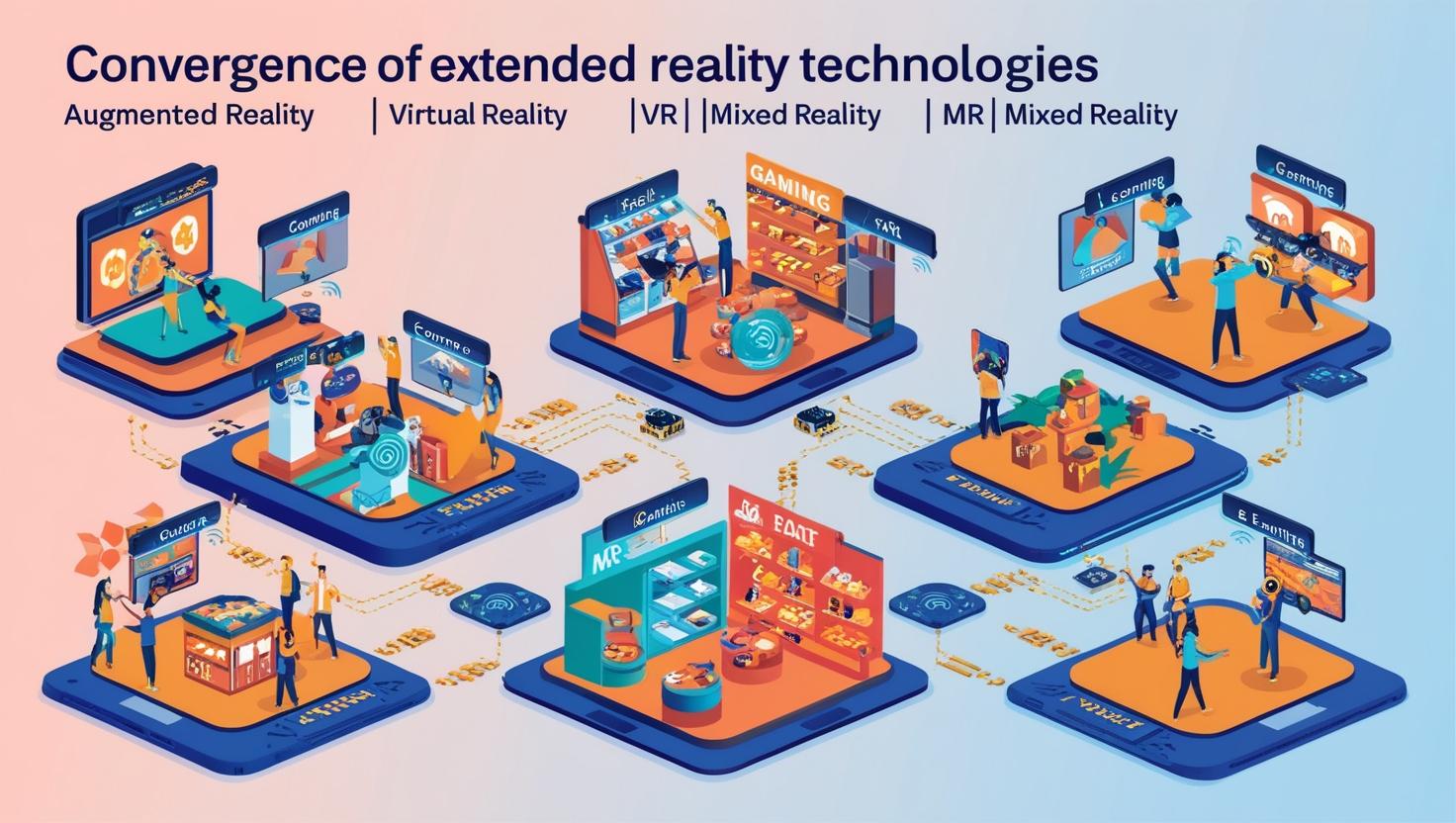
XR Market Trends Shifting Toward Industrial Applications
One of the most important Extended Reality Market Trends Gain Momentum with Industrial Use Cases is the shift from consumer-focused applications to enterprise and industrial deployment. While gaming and entertainment continue to hold strong demand, industries are now investing heavily in XR for operational efficiency and workforce enablement.
Industrial sectors such as manufacturing, automotive, aerospace, energy, and logistics are leveraging XR to bridge the gap between physical and digital environments. These applications are not experimental anymore—they are becoming operational necessities.
Recent market analysis highlights that XR adoption is increasingly driven by enterprise needs for training, simulation, design visualization, and remote collaboration, which directly improve productivity and reduce costs.
Industrial Training and Simulation Driving XR Adoption
A major factor accelerating Extended Reality Market Trends Gain Momentum with Industrial Use Cases is the growing use of XR in training and simulation.
Traditional training methods are often expensive, time-consuming, and sometimes unsafe—especially in industries like oil & gas, aviation, and heavy manufacturing. XR solves these challenges by offering immersive, risk-free training environments.
Workers can:
- Practice complex machine operations in virtual environments
- Simulate emergency scenarios safely
- Learn maintenance procedures interactively
This improves knowledge retention and reduces operational errors, making XR a valuable tool for workforce development.
Digital Twins and Smart Manufacturing Integration
Another major trend shaping Extended Reality Market Trends Gain Momentum with Industrial Use Cases is the integration of XR with digital twins and smart manufacturing systems.
In modern factories, XR is used to visualize and interact with digital replicas of physical systems. Engineers can:
- Simulate production lines before deployment
- Identify inefficiencies in real time
- Optimize layouts and workflows
- Reduce downtime through predictive insights
This capability is especially valuable in Industry 4.0 environments, where connected systems require real-time decision-making and visualization tools.
XR combined with AI and IoT is enabling fully connected, intelligent industrial ecosystems.
Remote Assistance and Field Service Optimization
Industrial organizations are increasingly adopting XR for remote assistance and field service operations. Technicians equipped with AR-enabled devices or smart glasses can receive real-time instructions from experts located anywhere in the world.
This reduces:
- Travel costs
- Downtime
- Maintenance delays
It also improves first-time fix rates and operational efficiency, especially in sectors like utilities, manufacturing, and energy.
This use case is becoming one of the fastest-growing contributors to Extended Reality Market Trends Gain Momentum with Industrial Use Cases.
Design, Engineering, and Product Development Applications
XR is also transforming product design and engineering workflows. Engineers and designers can now:
- Build and test 3D prototypes in virtual environments
- Collaborate across global teams in real time
- Detect design flaws before physical production
This reduces product development cycles and lowers prototyping costs significantly.
In automotive and aerospace industries, XR is now widely used for immersive design reviews and virtual prototyping, improving both accuracy and innovation speed.
Healthcare and Industrial Safety Use Cases
Beyond manufacturing, XR is also gaining traction in healthcare and safety-critical industrial environments. Surgeons use XR for pre-surgical planning, while industrial workers use it for hazard simulation and safety training.
In industrial environments, XR helps:
- Visualize safety risks
- Train employees in hazardous conditions
- Improve compliance with safety standards
These applications are further reinforcing Extended Reality Market Trends Gain Momentum with Industrial Use Cases across regulated industries.
Key Market Drivers Supporting Industrial XR Growth
Several factors are accelerating XR adoption in industrial sectors:
- Rising demand for workforce training and upskilling
- Need for remote collaboration tools
- Increasing complexity of industrial systems
- Integration of AI, 5G, and edge computing
- Growing focus on operational efficiency and cost reduction
According to industry reports, the convergence of XR with AI and industrial automation is becoming a major transformation force across manufacturing ecosystems.
Challenges in Industrial XR Adoption
Despite strong growth potential, XR adoption in industrial environments faces several challenges:
- High initial investment costs
- Hardware limitations and user comfort issues
- Data privacy and security concerns
- Integration complexity with legacy systems
- Need for skilled XR content developers
However, continuous improvements in hardware design, cloud computing, and AI-driven XR platforms are gradually addressing these barriers.
Future of Extended Reality Market Trends
The future of Extended Reality Market Trends Gain Momentum with Industrial Use Cases is highly promising. XR is expected to evolve into a core industrial tool rather than a supplementary technology.
Over the next decade, industries are likely to see:
- Fully immersive smart factories
- AI-powered XR assistants for technicians
- Real-time digital twin ecosystems
- Widespread adoption of AR glasses in field operations
As hardware becomes more affordable and software ecosystems mature, XR will transition from pilot projects to large-scale enterprise deployment.
FAQ