
The LiDAR market is witnessing rapid expansion as industries increasingly adopt advanced sensing technologies for automation, robotics, and intelligent systems. LiDAR (Light Detection and Ranging) enables machines to perceive their environment in 3D by measuring distances using laser pulses, making it a core technology for autonomous navigation, mapping, and real-time spatial awareness.
With the growing shift toward Industry 4.0, smart factories, and autonomous systems, LiDAR has become a critical enabler of robotics and automation across industrial, commercial, and research applications.
According to MarketsandMarkets, the global LiDAR market is projected to grow from USD 3.27 billion in 2025 to USD 12.79 billion by 2030, at a strong CAGR of 31.3% during the forecast period.
Robotics and Automation Driving LiDAR Adoption
Rise of Intelligent Robotics Systems
Robotics systems are becoming more autonomous and intelligent, requiring highly accurate perception capabilities. LiDAR provides precise depth sensing and object detection, enabling robots to navigate complex and dynamic environments without human intervention.
In industrial robotics, LiDAR supports:
- Real-time obstacle detection
- Autonomous navigation in warehouses
- Precision movement in manufacturing lines
- Safety monitoring in human-robot collaborative environments
This is accelerating its adoption in industrial automation and smart manufacturing ecosystems.
Expansion of Industrial Automation
The global shift toward automation in manufacturing, logistics, and warehousing is significantly boosting demand for LiDAR systems. Automated guided vehicles (AGVs) and autonomous mobile robots (AMRs) rely heavily on LiDAR sensors for mapping and navigation.
Key benefits driving adoption include:
- Improved operational efficiency
- Reduced human error
- Enhanced workplace safety
- 24/7 operational capability
As factories evolve into smart production hubs, LiDAR becomes essential for enabling machine perception and decision-making.
Growth of Service and Delivery Robotics
Beyond industrial environments, LiDAR is also powering service robots used in:
- E-commerce fulfillment centers
- Hospital logistics systems
- Retail automation
- Last-mile delivery systems
These robots depend on LiDAR for accurate spatial mapping and safe movement in dynamic human environments.
Download PDF Brochure @ https://www.marketsandmarkets.com/pdfdownloadNew.asp?id=1261
Technological Advancements Supporting Market Growth
Miniaturization and Solid-State LiDAR
One of the most important trends is the development of compact and solid-state LiDAR systems. These devices are smaller, more cost-effective, and more durable than traditional mechanical LiDAR systems, making them ideal for robotics applications.
Integration with AI and Machine Learning
Modern robotics systems combine LiDAR data with AI algorithms for:
- Object recognition
- Path planning
- Predictive navigation
- Environment mapping (SLAM)
This fusion of LiDAR and AI enhances the intelligence and autonomy of robotic systems.
3D Mapping and SLAM Technologies
LiDAR plays a critical role in Simultaneous Localization and Mapping (SLAM), enabling robots to build and update maps of unknown environments in real time while tracking their own position.
This is especially important in autonomous robots operating in dynamic or unstructured environments.
Key Application Areas in Robotics and Automation
Industrial Robotics
In manufacturing environments, LiDAR enables robotic arms and mobile robots to operate safely and efficiently alongside human workers.
Autonomous Mobile Robots (AMRs)
AMRs in warehouses and logistics centers use LiDAR for navigation, obstacle avoidance, and route optimization.
Warehouse and Supply Chain Automation
LiDAR is widely used in automated warehousing systems to support inventory management, sorting, and transportation tasks.
Humanoid and Service Robots
Advanced humanoid robots use LiDAR for environmental perception, allowing them to interact safely in human-centered environments.
Market Trends Influencing Growth
Shift Toward Physical AI Systems
The rise of “physical AI”—intelligent machines operating in real-world environments—is significantly boosting LiDAR demand. Robots equipped with LiDAR sensors can interpret and react to their surroundings in real time.
Increasing Adoption in Non-Automotive Sectors
While automotive applications remain important, robotics and industrial automation are emerging as major growth drivers for LiDAR adoption.
Growth of Smart Infrastructure
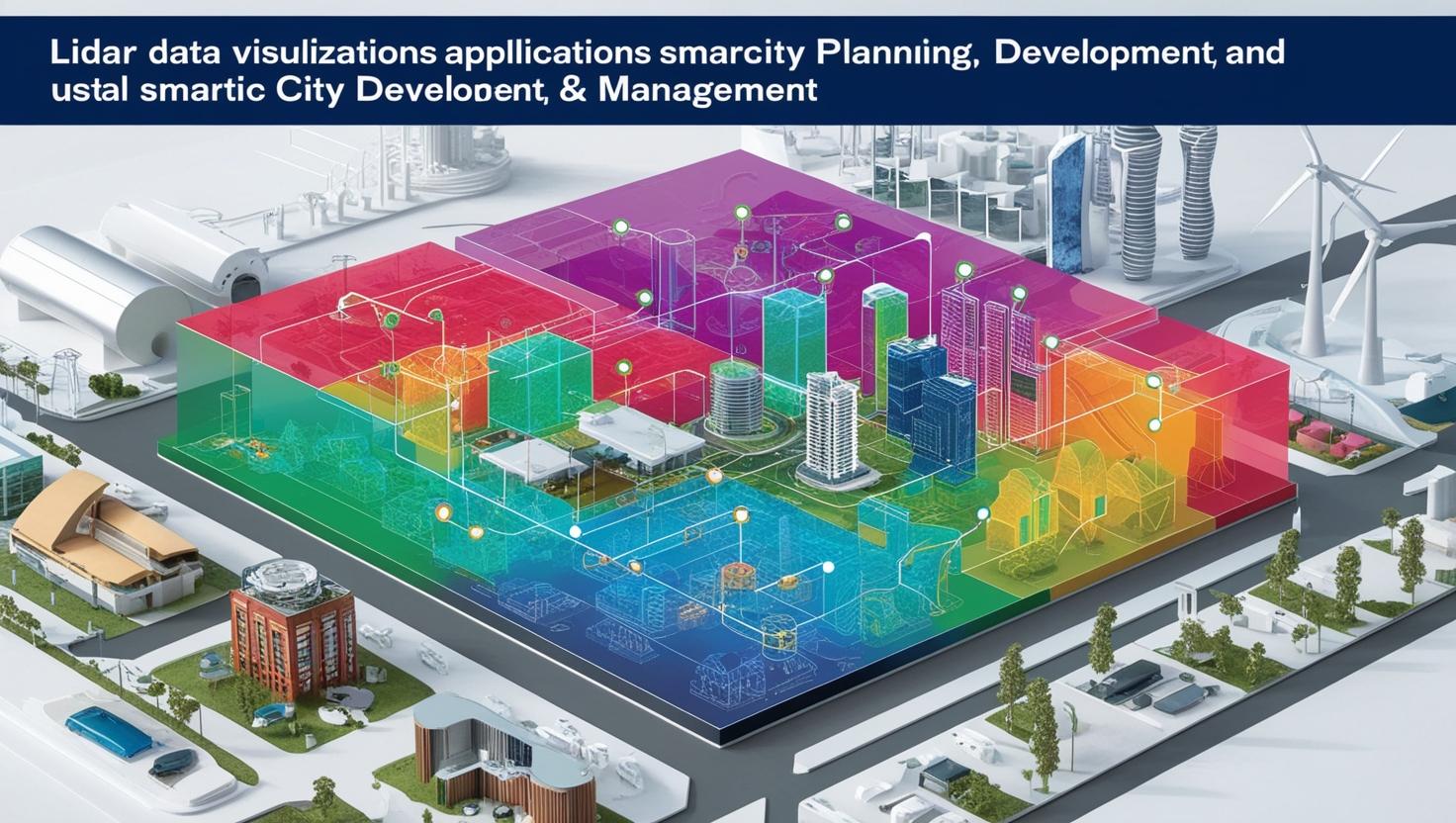
Smart cities and connected infrastructure projects are increasingly integrating LiDAR-based systems for traffic monitoring, security, and urban planning.
Cost Reduction and Mass Adoption
Advancements in semiconductor manufacturing and sensor design are reducing LiDAR costs, making the technology more accessible for robotics applications.
Challenges in the LiDAR Robotics Market
Despite strong growth, several challenges remain:
- High initial cost of advanced LiDAR systems
- Data processing complexity in real-time applications
- Environmental limitations (fog, rain, dust)
- Integration challenges with existing robotic platforms
Addressing these challenges is crucial for broader adoption across industries.
Competitive Landscape
The LiDAR market is highly competitive, with companies focusing on innovation in sensor design, AI integration, and robotics applications. Leading players include sensor manufacturers and robotics-focused technology firms investing heavily in next-generation LiDAR systems.
Future Outlook
The future of the LiDAR market in robotics and automation is highly promising. As industries continue to adopt autonomous systems, LiDAR will play an increasingly critical role in enabling machine perception and decision-making.
Key future developments include:
- Wider adoption of solid-state LiDAR in robotics
- Increased integration with edge AI computing
- Expansion in warehouse automation and logistics robotics
- Growth of fully autonomous industrial ecosystems
By 2030, LiDAR is expected to become a foundational sensing technology across most autonomous robotic systems.
The LiDAR market is accelerating rapidly in robotics and automation, driven by the global shift toward intelligent machines, smart factories, and autonomous systems. With strong growth projected through 2030, LiDAR is becoming an essential enabler of next-generation robotics, enhancing precision, safety, and operational efficiency across industries.