
The LiDAR (Light Detection and Ranging) market is experiencing significant growth, driven by advances in sensor technology, increased adoption in autonomous vehicles, drones, and geospatial mapping, and growing demand for precise 3D data across industries. As organizations prioritize automation, smart infrastructure, and environmental monitoring, LiDAR technology has become indispensable for high-accuracy measurement and mapping applications.
This article provides a comprehensive growth analysis of the LiDAR market, segmented by technology and application, with insights into regional trends, drivers, challenges, and future opportunities.
Market Overview
LiDAR technology uses laser pulses to measure distances and generate precise, three-dimensional information about the shape and surface characteristics of objects. Its applications span across automotive, aerospace, industrial, and environmental sectors.
Key advantages of LiDAR include:
- Accurate 3D spatial mapping
- Real-time detection and monitoring
- High-resolution imaging
- Integration with autonomous systems and GIS applications
The global LiDAR market is projected to witness strong growth, with increasing investment in autonomous vehicles, smart city projects, and aerial mapping solutions.
Market Segmentation by Technology
LiDAR systems are categorized based on their operating principles and design, each tailored to specific applications:
1. Mechanical LiDAR
Mechanical LiDAR uses spinning mirrors to capture 360-degree spatial data. It is widely adopted in autonomous vehicles, robotics, and mapping applications.
Benefits:
- Comprehensive field-of-view coverage
- High accuracy for 3D object detection
- Proven reliability for automotive and industrial applications
2. Solid-State LiDAR
Solid-state LiDAR features no moving parts, offering compact design, reduced cost, and enhanced durability. It is becoming increasingly preferred in automotive and consumer electronics applications.
Benefits:
- Compact and lightweight
- Lower production cost
- Greater resistance to mechanical wear
3. Flash LiDAR
Flash LiDAR captures an entire scene in a single laser shot, making it suitable for high-speed imaging and dynamic environments.
Benefits:
- Real-time detection of fast-moving objects
- Ideal for drones and UAV applications
- Reduced scanning time
Download PDF Brochure @ https://www.marketsandmarkets.com/pdfdownloadNew.asp?id=1261
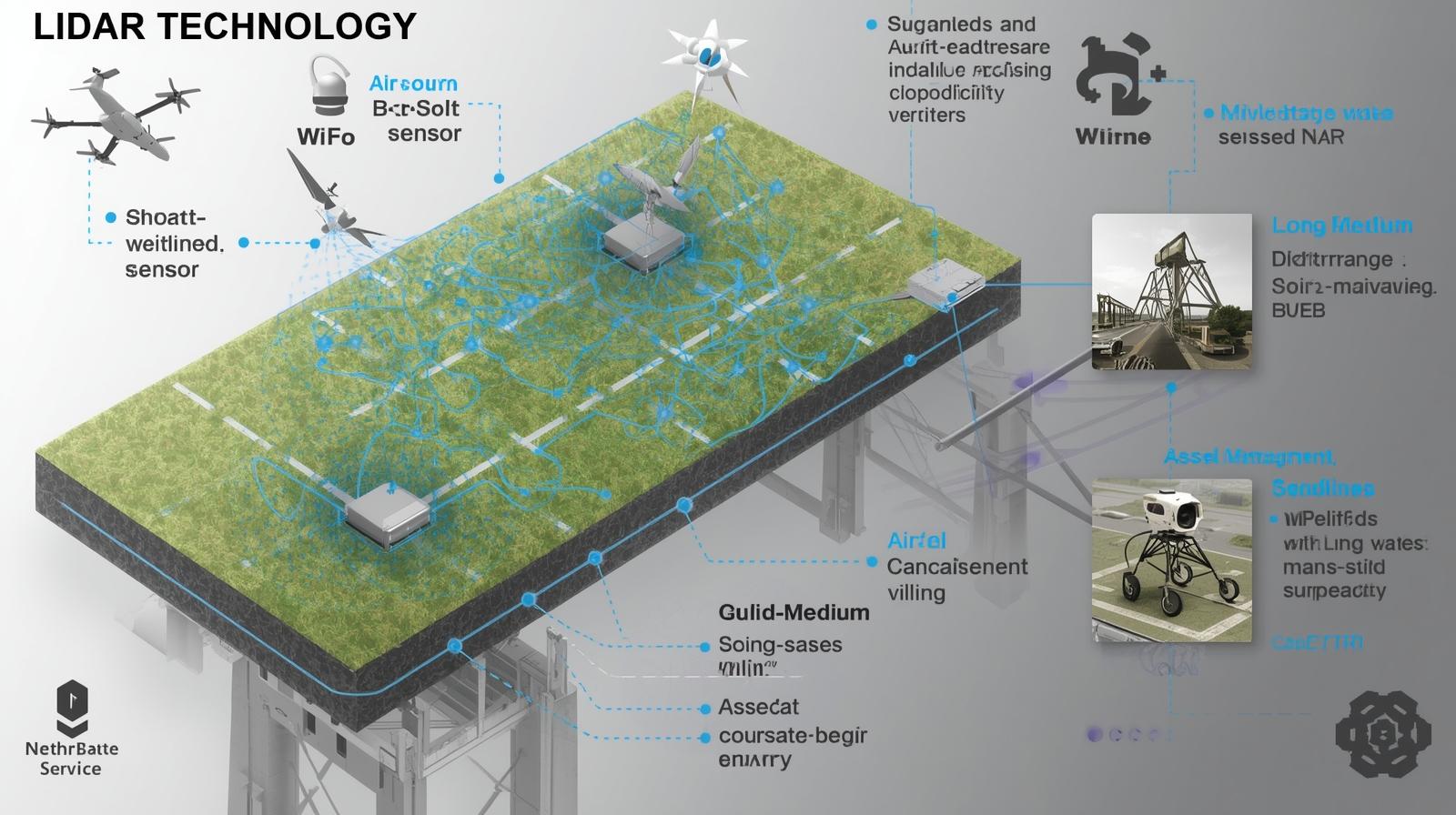
4. MEMS-based LiDAR
MEMS (Micro-Electro-Mechanical Systems) LiDAR uses micromirrors for laser beam steering. It is valued for precision, miniaturization, and integration in compact devices.
Benefits:
- Miniaturized form factor for small vehicles or UAVs
- Low power consumption
- High accuracy in constrained spaces
Market Segmentation by Application
LiDAR technology serves a diverse range of applications across multiple industries:
1. Automotive
Automotive LiDAR systems are critical for autonomous vehicles, Advanced Driver Assistance Systems (ADAS), and collision avoidance technologies. Growing investments in self-driving cars are a major driver of LiDAR adoption.
Key trends:
- Integration with AI for object recognition
- Enhanced sensor fusion with cameras and radar
- Rising demand for level 3 and level 4 autonomous vehicles
2. Aerial & UAV Mapping
LiDAR is widely used in drones and UAVs for topographic mapping, agriculture monitoring, forestry, and disaster management. Its ability to provide high-resolution 3D mapping makes it indispensable for geospatial applications.
Key trends:
- Use in precision agriculture for crop health monitoring
- Disaster assessment and infrastructure inspection
- Environmental monitoring for terrain and vegetation analysis
3. Industrial & Infrastructure
LiDAR helps in industrial automation, facility management, and construction surveying. It enables accurate spatial analysis, safety monitoring, and predictive maintenance.
Key trends:
- Smart infrastructure and building automation
- Collision avoidance in industrial robotics
- Accurate facility modeling for planning and maintenance
4. Defense & Security
Defense and security applications of LiDAR include surveillance, threat detection, and border monitoring. High-accuracy 3D imaging and real-time scanning capabilities enhance situational awareness and operational safety.
Regional Insights
North America
North America dominates the LiDAR market due to early adoption of autonomous vehicles, advanced infrastructure, and strong R&D investment. The U.S. is a major hub for LiDAR innovation and manufacturing.
Europe
Europe is expanding its LiDAR market through smart city initiatives, autonomous mobility projects, and environmental monitoring programs. Germany, France, and the U.K. are leading adopters.
Asia-Pacific
Asia-Pacific is the fastest-growing region, driven by urbanization, smart city development, and drone adoption. China, Japan, and India are investing heavily in autonomous vehicles and mapping technologies.
Middle East & Africa
LiDAR adoption in this region focuses on infrastructure development, mining, and energy projects, with a growing emphasis on smart city projects.
Market Drivers
- Autonomous Vehicle Development – Increasing investments in self-driving technology are a primary driver for automotive LiDAR adoption.
- Urbanization & Smart Cities – Need for precise mapping and infrastructure planning fuels LiDAR deployment.
- Advancements in Drone Technology – UAV integration and aerial mapping create new opportunities for LiDAR.
- Industrial Automation – LiDAR enhances safety, monitoring, and operational efficiency in factories and warehouses.
Market Challenges
- High costs of high-resolution LiDAR systems
- Complex integration with existing vehicle or industrial systems
- Regulatory hurdles for drone and UAV applications
- Need for skilled professionals to operate and interpret LiDAR data
Future Outlook
The LiDAR market is expected to continue strong growth through 2030, fueled by:
- Miniaturization of LiDAR sensors for automotive and consumer electronics
- AI-powered LiDAR systems enabling real-time decision-making
- Expansion in drone-based and UAV-based mapping
- Wider adoption in smart infrastructure, robotics, and industrial automation
As the market evolves, LiDAR technology will become more cost-effective, versatile, and integrated, unlocking opportunities across sectors and driving the future of autonomous systems, mapping, and safety solutions.
The LiDAR Market is on a transformative growth trajectory, propelled by technological advancements and expanding applications across automotive, industrial, aerial, and defense sectors. By 2030, the market is expected to witness widespread adoption as autonomous vehicles, drones, and smart city initiatives continue to increase demand for precise, real-time 3D mapping and sensing solutions.