
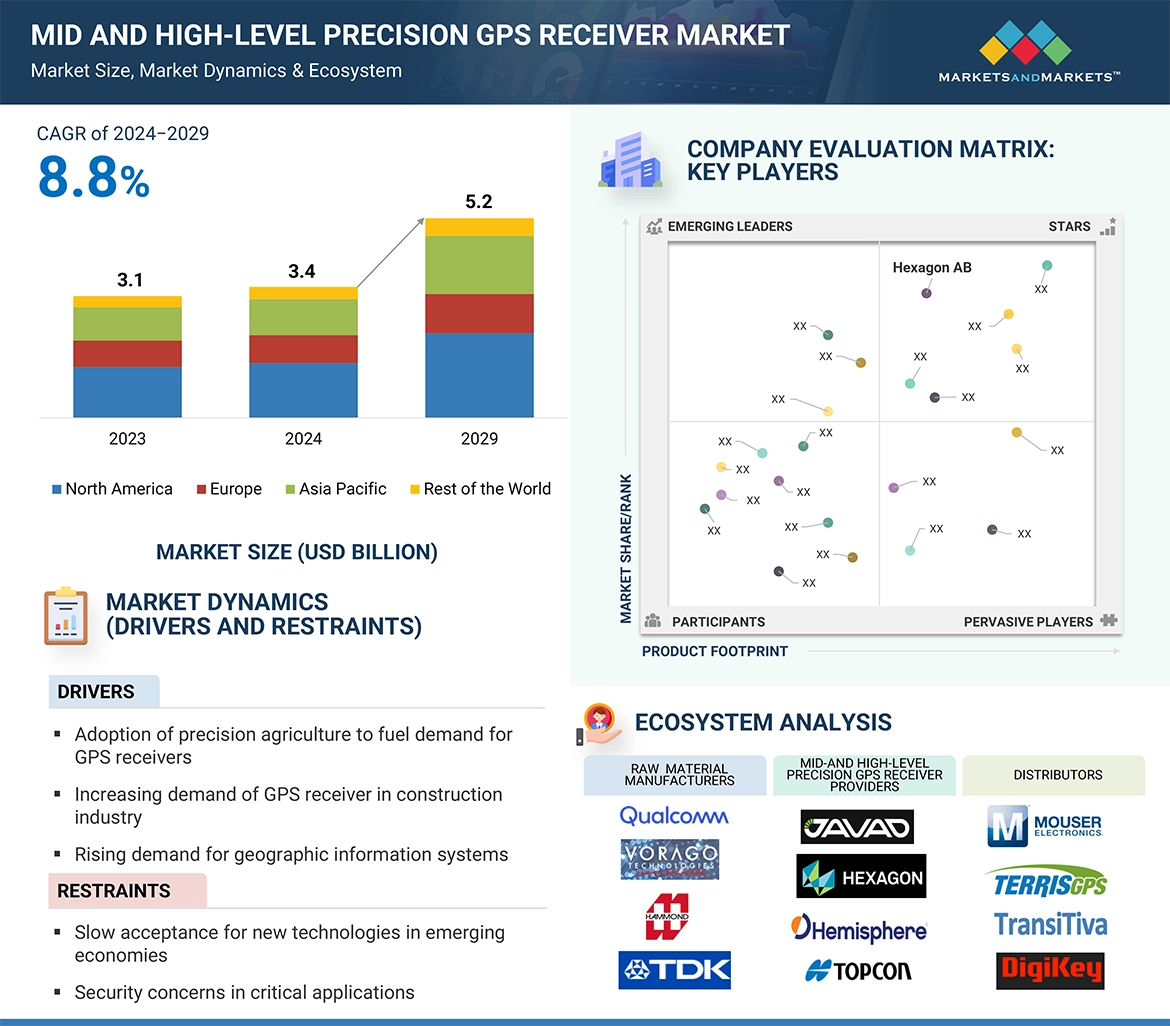
The Mid and High-Level Precision GPS Receiver Market is experiencing accelerated growth, largely driven by emerging applications in drones and autonomous vehicles. As industries increasingly adopt automation and intelligent systems, the need for highly accurate positioning solutions has become critical. Precision GPS receivers, capable of delivering centimeter-level accuracy, are essential for enabling safe navigation, real-time tracking, and efficient operation of these advanced systems. The rapid expansion of drone technology and autonomous mobility solutions is creating new opportunities and significantly boosting demand for high-performance GPS receivers.
Drones, also known as unmanned aerial vehicles, are becoming indispensable tools across a wide range of industries, including agriculture, construction, defense, and logistics. These applications require precise navigation and positioning to ensure accurate data collection and safe operation. Mid and high-level precision GPS receivers enable drones to maintain stable flight paths, perform automated missions, and capture high-resolution data with minimal errors. In applications such as aerial surveying and mapping, the accuracy provided by these receivers is critical for generating reliable geospatial data. As drone usage continues to expand, the demand for advanced GPS solutions is expected to grow substantially.
Download PDF Brochure @ https://www.marketsandmarkets.com/pdfdownloadNew.asp?id=166948901
In the agricultural sector, drones equipped with precision GPS receivers are transforming traditional farming practices. These drones are used for tasks such as crop monitoring, spraying, and field analysis. High-accuracy positioning allows drones to operate efficiently, ensuring uniform coverage and reducing resource wastage. The integration of GPS technology with data analytics and IoT platforms is enabling farmers to make informed decisions and optimize productivity. As precision agriculture continues to evolve, the adoption of GPS-enabled drones is expected to increase, contributing significantly to market growth.
The construction and infrastructure sector is also benefiting from the use of drones with precision GPS technology. Drones are increasingly used for site inspection, progress monitoring, and mapping of construction projects. High-precision GPS receivers enable accurate data collection and real-time monitoring, improving project efficiency and reducing costs. The ability to access difficult or hazardous areas without human intervention enhances safety and operational effectiveness. As the construction industry continues to adopt digital technologies, the demand for GPS-enabled drone solutions is expected to rise.
Autonomous vehicles represent another major driver of growth in the precision GPS receiver market. These vehicles rely on accurate positioning data to navigate roads, detect obstacles, and make real-time decisions. Mid and high-level precision GPS receivers provide the accuracy required for lane-level navigation and safe operation. In addition to passenger vehicles, autonomous systems are being used in logistics, mining, and public transportation. The increasing development and deployment of autonomous vehicles are creating a strong demand for advanced GPS solutions, driving market expansion.
Inquiry Before Buying @ https://www.marketsandmarkets.com/Enquiry_Before_BuyingNew.asp?id=166948901
The logistics and transportation sector is witnessing a significant transformation with the adoption of autonomous delivery systems. Drones and self-driving vehicles are being used for last-mile delivery, improving efficiency and reducing operational costs. Precision GPS receivers play a critical role in enabling these systems to navigate accurately and deliver goods safely. The integration of GPS technology with real-time tracking and route optimization systems is enhancing the efficiency of logistics operations. As e-commerce and demand for fast delivery continue to grow, the adoption of autonomous delivery solutions is expected to increase, further boosting market demand.
Technological advancements are playing a crucial role in supporting the integration of precision GPS receivers into drones and autonomous vehicles. Innovations such as multi-constellation GNSS, multi-frequency signals, and real-time kinematic positioning are improving accuracy and reliability. These technologies enable GPS receivers to perform effectively in challenging environments, such as urban areas with signal interference. The integration of GPS with other sensors, including LiDAR and cameras, is creating robust navigation systems that enhance the performance of autonomous platforms. As technology continues to evolve, it is expected to drive further adoption of precision GPS receivers.
View detailed Table of Content here – https://www.marketsandmarkets.com/Market-Reports/mid-high-level-precision-gps-market-166948901.html
The defense sector is also leveraging drones and autonomous systems for surveillance, reconnaissance, and mission-critical operations. High-precision GPS receivers are essential for ensuring accurate navigation and targeting in these applications. The increasing focus on defense modernization and the adoption of advanced technologies are driving demand for GPS-enabled autonomous systems. As governments invest in unmanned systems for security and defense purposes, the market for precision GPS receivers is expected to grow.
Despite the strong growth prospects, challenges such as signal interference, regulatory constraints, and high costs remain. Drones and autonomous vehicles often operate in environments where GPS signals can be obstructed or degraded, requiring the integration of complementary technologies to ensure accuracy. Additionally, regulatory frameworks governing the use of drones and autonomous vehicles vary across regions, which can impact market adoption. However, ongoing advancements in GNSS technology and supportive regulatory developments are expected to address these challenges over time.
Emerging applications in drones and autonomous vehicles are playing a pivotal role in boosting the mid and high-level precision GPS receiver market. The increasing adoption of these technologies across industries such as agriculture, construction, logistics, and defense is driving demand for high-accuracy positioning solutions. Supported by technological advancements and growing investment in automation, precision GPS receivers are becoming essential components of modern autonomous systems. As these applications continue to expand, the market is expected to experience sustained growth, driven by the evolving needs of intelligent and connected systems.