
The Automated Stationary Non-Destructive Testing (NDT) Inspection Market is gaining significant traction as industries increasingly prioritize quality assurance, safety, and operational efficiency. Non-destructive testing refers to a range of inspection techniques used to evaluate the properties of materials, components, or systems without causing damage. Automated stationary NDT systems are fixed installations designed to perform high-precision inspections on production lines or within controlled environments.
These systems are widely used in industries such as aerospace, automotive, oil and gas, power generation, and manufacturing. As industries move toward automation and smart manufacturing, the demand for advanced, reliable, and high-speed inspection solutions is growing rapidly.
The global automated stationary NDT & inspection systems market is expected to grow from USD 767.4 million in 2025 to USD 1,195.9 million by 2030, registering a robust CAGR of 9.3%
Market Overview
Automated stationary NDT systems are designed to deliver consistent, repeatable, and accurate inspection results. Unlike manual inspection methods, these systems reduce human error and significantly improve inspection speed and reliability. They are typically integrated into production lines to perform continuous or batch inspection of components.
The growing focus on product quality, safety regulations, and compliance standards is driving the adoption of automated NDT systems globally. Additionally, the integration of technologies such as artificial intelligence (AI), robotics, and machine learning is enhancing the capabilities of these systems, making them more intelligent and efficient.
Key Market Drivers
1. Increasing Demand for Quality Assurance
Industries are under constant pressure to maintain high-quality standards. Automated stationary NDT systems ensure that products meet strict quality requirements by detecting defects such as cracks, voids, and material inconsistencies early in the production process.
2. Stringent Safety Regulations
Regulatory bodies across industries impose strict safety and quality regulations. Automated NDT systems help organizations comply with these standards by providing accurate and traceable inspection data.
3. Growth in Manufacturing and Industrial Automation
The rise of Industry 4.0 and smart manufacturing is driving the adoption of automated systems. Automated NDT solutions integrate seamlessly into production lines, enabling real-time inspection and process optimization.
4. Technological Advancements
Advancements in imaging technologies, robotics, and data analytics are enhancing the performance of NDT systems. These innovations enable faster inspections, higher accuracy, and improved defect detection capabilities.
Download PDF Brochure @ https://www.marketsandmarkets.com/pdfdownloadNew.asp?id=233564506
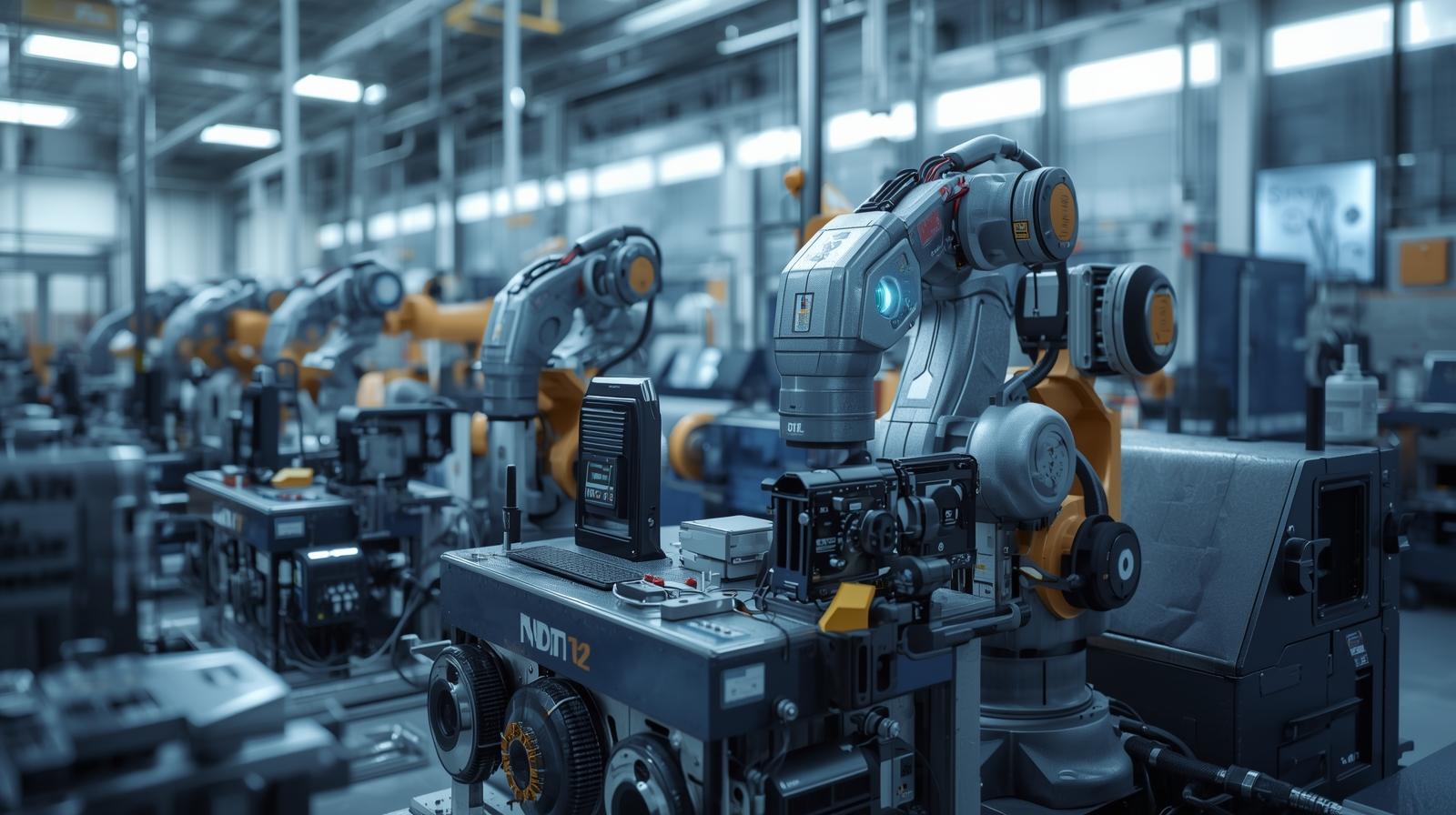
Types of Automated Stationary NDT Systems
Ultrasonic Testing Systems
Ultrasonic testing uses high-frequency sound waves to detect internal flaws in materials. These systems are widely used for inspecting welds, castings, and composite materials. Automated ultrasonic systems provide precise measurements and are commonly used in aerospace and automotive industries.
Radiographic Testing Systems
Radiographic testing uses X-rays or gamma rays to create images of the internal structure of materials. Automated radiographic systems are capable of detecting hidden defects such as cracks, porosity, and inclusions. They are widely used in industries requiring high levels of accuracy and safety.
Eddy Current Testing Systems
Eddy current testing is used to detect surface and near-surface defects in conductive materials. These systems are commonly used in the inspection of aircraft components, pipelines, and heat exchangers.
Magnetic Particle Inspection Systems
Magnetic particle inspection is used to detect surface and near-surface discontinuities in ferromagnetic materials. Automated systems enhance the efficiency and accuracy of this technique by reducing manual intervention.
Visual Inspection Systems
Automated visual inspection systems use cameras and image processing software to detect surface defects. These systems are widely used in manufacturing for inspecting product appearance, alignment, and surface quality.
Applications Across Industries
Aerospace
The aerospace industry relies heavily on NDT systems to ensure the safety and reliability of aircraft components. Automated stationary NDT systems are used to inspect critical parts such as turbine blades, fuselage components, and landing gear.
Automotive
In the automotive industry, NDT systems are used to inspect engine components, chassis parts, and safety-critical systems. Automated inspection ensures high-quality production and reduces the risk of defects.
Oil and Gas
The oil and gas industry uses NDT systems to inspect pipelines, pressure vessels, and storage tanks. These systems help prevent leaks, corrosion, and structural failures.
Power Generation
NDT systems are essential for inspecting components in power plants, including turbines, boilers, and nuclear reactors. They help ensure operational safety and efficiency.
Manufacturing
Manufacturing industries use automated NDT systems to maintain product quality and consistency. These systems are integrated into production lines to inspect raw materials and finished products.
Market Challenges
High Initial Investment
Automated stationary NDT systems require significant capital investment in equipment, installation, and integration. This can be a barrier for small and medium-sized enterprises.
Technical Complexity
Operating and maintaining advanced NDT systems requires skilled personnel and technical expertise. Training and workforce development are essential for effective implementation.
Integration Challenges
Integrating NDT systems into existing production lines can be complex and may require customization and system upgrades.
Emerging Trends
Integration of AI and Machine Learning
AI is revolutionizing NDT inspection by enabling automated defect detection and predictive maintenance. Machine learning algorithms can analyze inspection data and improve accuracy over time.
Robotics and Automation
Robotic systems are increasingly being used to automate inspection processes. These robots can perform inspections in hazardous or hard-to-reach areas, improving safety and efficiency.
Digitalization and Data Analytics
Digital NDT systems generate large amounts of data that can be analyzed to improve decision-making. Advanced analytics tools help identify trends, optimize processes, and reduce downtime.
Real-Time Inspection
Real-time inspection capabilities are becoming increasingly important in modern manufacturing. Automated systems can detect defects instantly and trigger corrective actions.
Future Outlook
The automated stationary NDT inspection market is expected to witness steady growth in the coming years. Increasing demand for high-quality products, coupled with advancements in automation and digital technologies, will drive market expansion.
As industries continue to adopt smart manufacturing practices, the integration of AI, robotics, and IoT will further enhance the capabilities of NDT systems. The future of NDT lies in fully automated, intelligent, and connected inspection solutions.
Conclusion
The automated stationary NDT inspection market is playing a critical role in ensuring quality, safety, and efficiency across industries. With advancements in technology and increasing regulatory requirements, the demand for automated inspection systems is expected to grow significantly.
These systems not only improve inspection accuracy but also enhance productivity and reduce operational risks. As industries move toward automation and digital transformation, automated stationary NDT systems will become an integral part of modern manufacturing and industrial processes.
FAQs
1. What is automated stationary NDT inspection?
It refers to the use of fixed, automated systems to inspect materials and components without causing damage.
2. Which industries use NDT systems?
Industries such as aerospace, automotive, oil and gas, power generation, and manufacturing use NDT systems.
3. What are the main types of NDT systems?
Common types include ultrasonic, radiographic, eddy current, magnetic particle, and visual inspection systems.
4. What are the benefits of automated NDT systems?
They improve accuracy, reduce human error, enhance efficiency, and provide real-time inspection capabilities.
5. What technologies are driving the NDT market?
AI, robotics, machine learning, and advanced imaging technologies are key drivers of the market.