
The Digital Twin in Marine Market is witnessing significant growth as the maritime industry increasingly adopts digital technologies to improve operational efficiency, vessel safety, and sustainability. Digital twin technology creates a virtual replica of ships, ports, and maritime infrastructure, enabling real-time monitoring, predictive maintenance, performance optimization, and improved decision-making.
The global shipping industry is undergoing a digital transformation driven by automation, smart ship technologies, and stricter environmental regulations. Ship owners, operators, and shipyards are leveraging digital twin models to simulate vessel performance, optimize fuel consumption, reduce downtime, and extend asset lifecycles. With increasing adoption of IoT sensors, artificial intelligence (AI), big data analytics, and cloud computing, digital twin technology is becoming a crucial component of modern maritime operations.
According to industry insights, the Digital Twin in Marine Market is expected to grow significantly by 2032, fueled by increasing investments in smart shipping infrastructure, the rise of autonomous vessels, and growing emphasis on predictive maintenance solutions.
Download PDF Brochure:
https://www.marketsandmarkets.com/pdfdownloadNew.asp?id=213848743
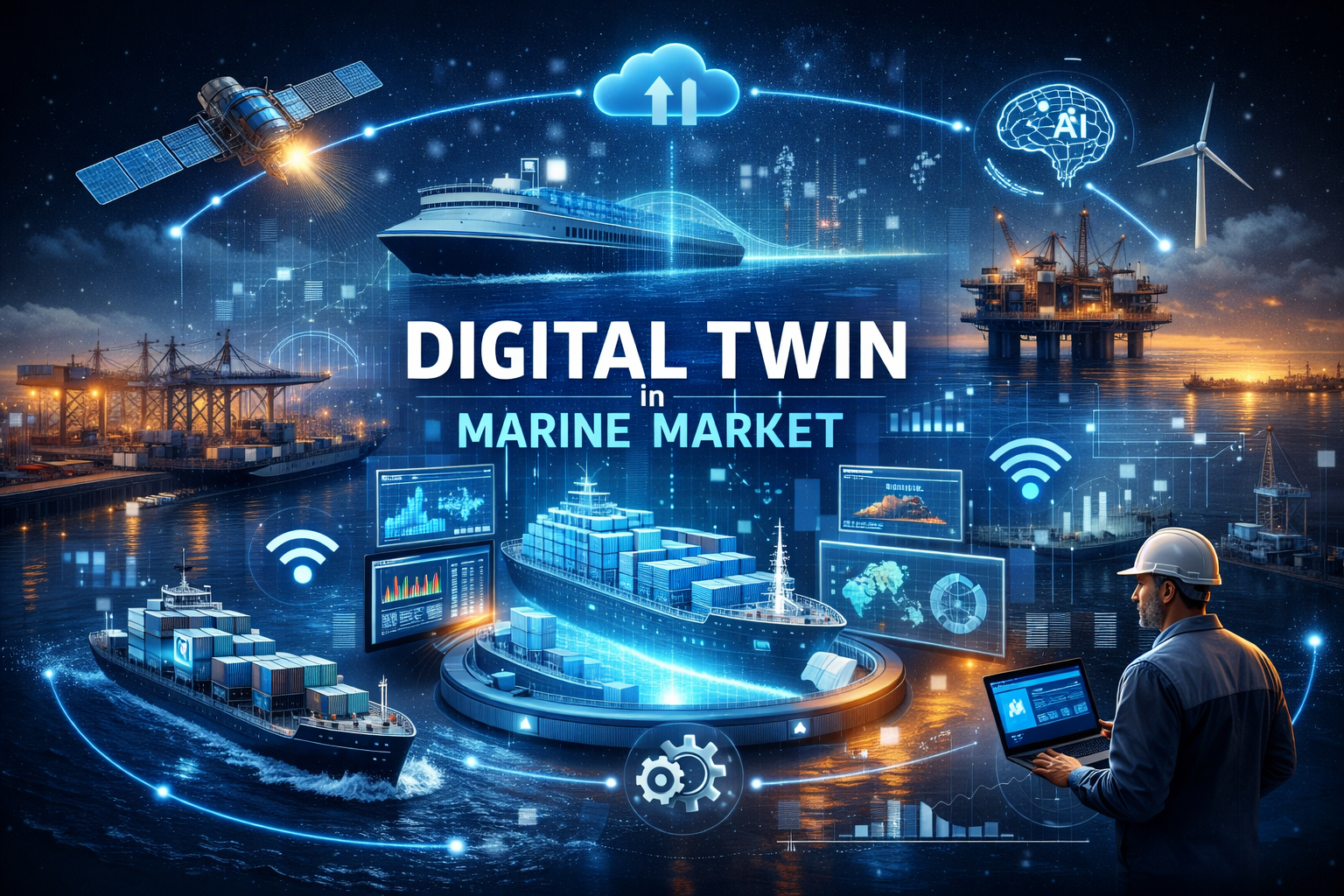
Rising Demand for Smart Shipping and Connected Vessels
The growing shift toward smart shipping and connected vessel ecosystems is a major driver for the digital twin market in the marine industry. Shipping companies are integrating digital twin solutions to simulate vessel operations, monitor system performance, and predict equipment failures before they occur.
By combining IoT-enabled sensors with digital twin models, operators can analyze real-time vessel data related to engine performance, hull conditions, navigation systems, and fuel efficiency. This allows maritime companies to optimize routes, reduce operational costs, and improve safety at sea.
Additionally, digital twin technology supports remote monitoring of fleets, enabling operators to oversee multiple vessels simultaneously and make informed decisions based on data-driven insights.
Predictive Maintenance Transforming Vessel Operations
Predictive maintenance is one of the most impactful applications of digital twin technology in the marine sector. Traditional maintenance methods rely on scheduled inspections, which may lead to unexpected equipment failures or unnecessary maintenance activities.
Digital twin models continuously collect and analyze operational data from ship components such as engines, propulsion systems, and onboard machinery. This enables shipping companies to identify potential issues early and schedule maintenance proactively, minimizing downtime and reducing repair costs.
As shipping companies strive to improve operational efficiency and reduce maintenance expenditures, predictive maintenance solutions powered by digital twin technology are gaining strong traction across the industry.
Increasing Adoption of Autonomous and Smart Ships
The development of autonomous ships and advanced navigation systems is further accelerating the adoption of digital twin solutions in the marine sector. Digital twins enable simulation and testing of vessel operations in virtual environments before real-world deployment.
Shipbuilders and technology providers are using digital twin models to simulate navigation routes, test operational scenarios, and evaluate vessel performance under different environmental conditions. This helps improve the reliability and safety of autonomous shipping technologies.
As the maritime industry moves toward autonomous and semi-autonomous vessels, digital twin technology will play a critical role in enabling intelligent ship operations and decision support systems.
Port Digitalization and Smart Maritime Infrastructure
Beyond vessels, digital twin technology is also being widely implemented in port operations and maritime infrastructure management. Ports are adopting digital twin models to simulate cargo flows, optimize port logistics, and enhance operational efficiency.
Digital twins help port authorities monitor infrastructure such as cranes, terminals, docks, and cargo handling equipment in real time. By analyzing performance data, ports can improve capacity planning, reduce congestion, and streamline cargo operations.
The growing trend of smart ports and digital maritime ecosystems is expected to significantly contribute to the expansion of the Digital Twin in Marine Market over the coming years.
Environmental Regulations Driving Technology Adoption
The maritime sector faces increasing pressure to comply with global environmental regulations and carbon emission reduction targets. Organizations such as the International Maritime Organization (IMO) are introducing strict guidelines to reduce greenhouse gas emissions from shipping operations.
Digital twin technology helps shipping companies monitor fuel consumption, simulate energy-efficient routes, and optimize vessel performance to meet sustainability goals. By providing detailed insights into energy usage and operational efficiency, digital twins enable operators to reduce fuel costs and environmental impact.
Regional Outlook
North America and Europe are expected to be major markets for digital twin solutions in the marine sector due to strong investments in maritime digitalization, advanced shipbuilding technologies, and smart port initiatives.
The Asia-Pacific region is also witnessing significant growth, driven by major shipbuilding countries such as China, South Korea, and Japan. Rapid expansion of global trade, increasing fleet modernization, and government initiatives to digitize maritime infrastructure are fueling market growth in the region.
Competitive Landscape
The Digital Twin in Marine Market includes several global technology providers and maritime solution companies that are actively investing in innovation and partnerships. These companies are focusing on advanced analytics, AI-powered simulations, and cloud-based digital twin platforms to enhance maritime operations.
Key players in the market include companies specializing in industrial software, maritime automation systems, and digital engineering solutions. Strategic collaborations between shipbuilders, shipping companies, and technology providers are expected to accelerate the deployment of digital twin technologies across the marine industry.
Request Free Sample Pages:
https://www.marketsandmarkets.com/Market-Reports/digital-twin-in-marine-market-213848743.html
Future Outlook
The future of the Digital Twin in Marine Market looks promising as digital transformation continues to reshape the maritime sector. Increasing adoption of smart ships, connected fleets, predictive maintenance technologies, and autonomous navigation systems will drive significant demand for digital twin solutions.
By enabling real-time monitoring, performance optimization, and data-driven decision-making, digital twin technology is set to become a cornerstone of next-generation maritime operations.
As shipping companies strive for improved efficiency, safety, and sustainability, the Digital Twin in Marine Market is expected to witness robust growth through 2032.