
The LiDAR Industry Growth is experiencing unprecedented momentum as advancements in 3D sensing and mapping technologies continue to transform industries such as automotive, robotics, surveying, and smart infrastructure. LiDAR, which stands for Light Detection and Ranging, has become a cornerstone technology for high-precision spatial measurements, enabling real-time 3D modeling and enhanced situational awareness. As industries increasingly rely on accurate and rapid sensing solutions, the LiDAR Industry Growth is expected to remain strong over the coming years.
Drivers of LiDAR Industry Growth
A primary driver of LiDAR Industry Growth is the rapid adoption of autonomous vehicles and advanced driver assistance systems (ADAS). LiDAR sensors provide precise distance, shape, and velocity data, which are critical for safe navigation, collision avoidance, and environment mapping. Automotive manufacturers are integrating LiDAR into self-driving cars, trucks, and delivery vehicles, fueling LiDAR Industry Growth by increasing demand for high-performance, reliable sensors.
Advancements in 3D sensing technologies are further accelerating LiDAR Industry Growth. Solid-state and MEMS-based LiDAR systems are reducing size, weight, and cost while improving detection range and resolution. These technological innovations enable broader adoption in consumer electronics, drones, robotics, and industrial automation. Companies are investing heavily in R&D to enhance sensor accuracy, durability, and real-time processing capabilities, supporting sustained LiDAR Industry Growth.
Download PDF Brochure @ https://www.marketsandmarkets.com/pdfdownloadNew.asp?id=1261
Applications Driving LiDAR Industry Growth
The LiDAR Industry Growth is supported by its wide-ranging applications across multiple sectors:
-
Automotive and Transportation – LiDAR enables autonomous driving, collision detection, and advanced mapping for navigation systems.
-
Robotics and Drones – LiDAR enhances obstacle detection, terrain mapping, and object recognition for industrial robots and aerial drones.
-
Geospatial Mapping and Surveying – LiDAR facilitates high-resolution 3D terrain mapping, urban planning, and environmental monitoring.
-
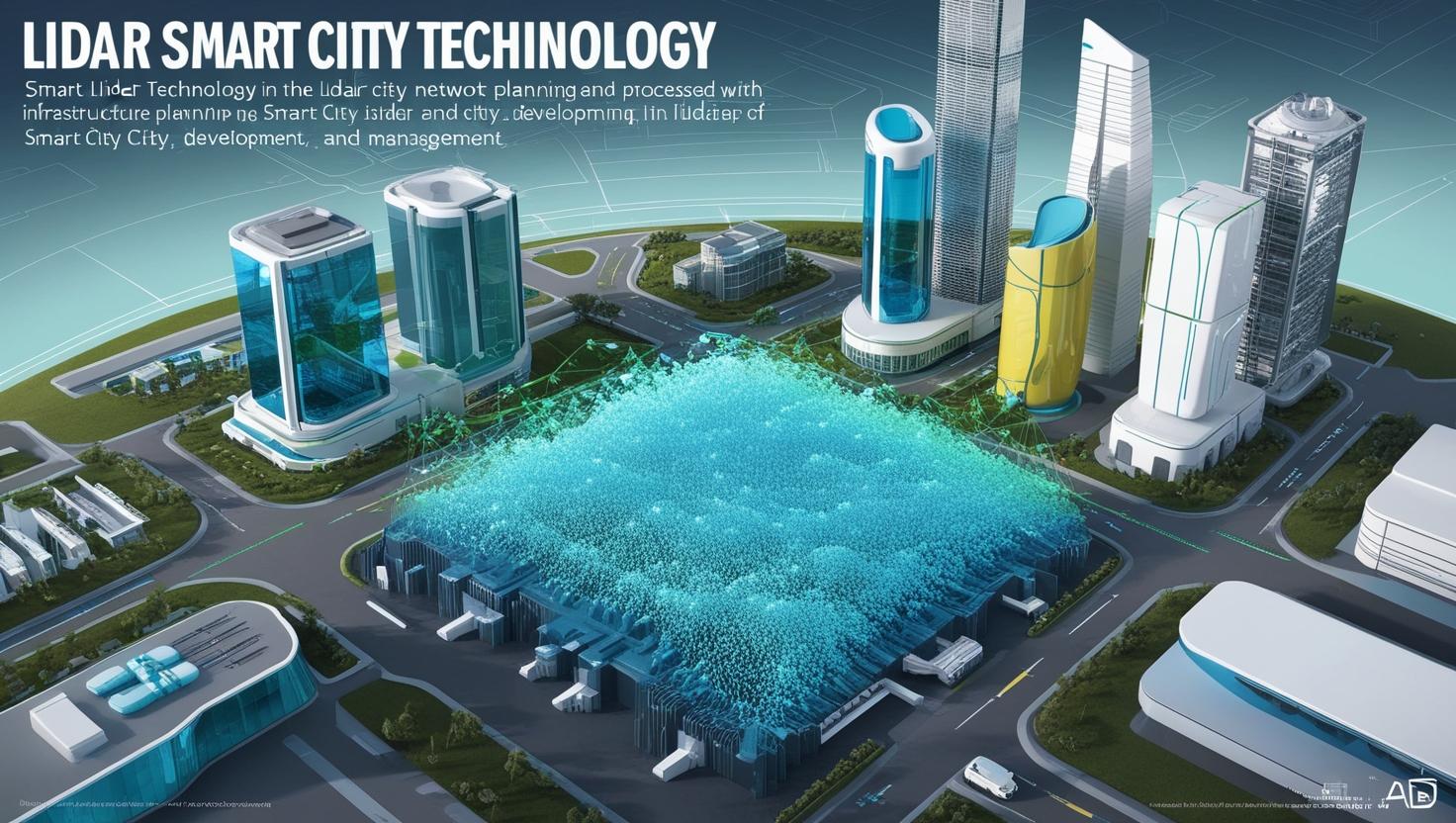
Smart Infrastructure and Smart Cities – LiDAR supports traffic monitoring, building mapping, and infrastructure planning by providing precise spatial data.
The increasing demand for high-resolution environmental perception in these sectors is a key contributor to LiDAR Industry Growth. Organizations are leveraging LiDAR sensors for real-time decision-making, improving operational efficiency, and reducing safety risks.
Regional Insights
The LiDAR Industry Growth is particularly strong in North America and Europe, driven by early adoption of autonomous vehicles, robust R&D infrastructure, and smart city initiatives. Meanwhile, the Asia-Pacific region is witnessing rapid LiDAR Industry Growth due to urbanization, expanding automotive production, and growing investments in infrastructure and industrial automation technologies. Countries like China, Japan, and South Korea are emerging as high-growth markets for LiDAR solutions.
Market Trends
Several trends are shaping the LiDAR Industry Growth trajectory:
-
Integration with Artificial Intelligence (AI) and Machine Learning (ML) – AI-enabled LiDAR systems enhance object recognition, predictive analytics, and autonomous decision-making.
-
Miniaturization of Sensors – Smaller, lightweight LiDAR sensors are enabling broader adoption in drones, consumer electronics, and portable mapping solutions.
-
Cost Reduction Strategies – Advances in solid-state and MEMS technologies are reducing manufacturing costs, making LiDAR more accessible to various industries.
-
Expansion into Non-Automotive Applications – LiDAR is increasingly applied in agriculture, mining, and industrial automation, further boosting LiDAR Industry Growth.
Challenges
Despite strong momentum, the LiDAR Industry Growth faces challenges such as high initial costs, integration complexity, and competition from alternative sensing technologies like cameras and radar. However, ongoing technological innovations, cost optimization, and increasing application diversity are mitigating these challenges and supporting sustainable market expansion.
Future Outlook
The future of the LiDAR Industry Growth looks promising, driven by continuous advancements in 3D sensing and mapping technologies. As industries increasingly demand real-time, high-precision spatial data, LiDAR adoption will expand across autonomous vehicles, robotics, smart cities, and industrial automation. Enhanced sensor accuracy, long-range detection capabilities, and AI-powered analytics will further accelerate LiDAR Industry Growth, positioning it as a critical technology for the next generation of digital and automated systems.
In conclusion, LiDAR Industry Growth Driven by Advancements in 3D Sensing and Mapping Technologies underscores the pivotal role of LiDAR in enabling accurate, real-time, and scalable spatial intelligence. With expanding applications across automotive, industrial, and smart infrastructure sectors, the LiDAR Industry Growth is poised to remain robust, innovative, and transformative in the global technology landscape.
FAQ
1. What is LiDAR?
LiDAR (Light Detection and Ranging) is a remote sensing technology that uses laser pulses to measure distances and generate high-resolution 3D maps of objects and environments.
2. What is driving LiDAR Industry Growth?
The LiDAR Industry Growth is driven by advancements in 3D sensing and mapping technologies, adoption in autonomous vehicles, robotics, drones, smart infrastructure, and industrial automation.
3. What are the main applications of LiDAR?
Key applications include:
-
Automotive & Transportation – Autonomous driving, collision avoidance, and navigation
-
Robotics & Drones – Obstacle detection, terrain mapping, and object recognition
-
Geospatial & Surveying – High-resolution mapping, urban planning, and environmental monitoring
-
Smart Infrastructure – Traffic management, building mapping, and smart city planning
4. How does LiDAR differ from radar and cameras?
LiDAR provides high-resolution 3D mapping with precise distance, velocity, and spatial data, while cameras capture visual information and radar detects objects in adverse weather conditions but with lower resolution.
5. What technologies are used in LiDAR sensors?
LiDAR sensors use technologies such as solid-state LiDAR, MEMS-based LiDAR, and scanning LiDAR, often integrated with AI and machine learning for enhanced perception and analytics.