
The Over-the-Air (OTA) Testing Market is experiencing rapid growth as the demand for reliable wireless connectivity expands across consumer electronics, automotive, and smart city applications. OTA testing is a crucial process that evaluates the performance of wireless devices and networks in real-world conditions, ensuring compliance, reliability, and optimal functionality. This article explores the OTA Testing Market by components, technologies, devices, and applications, highlighting trends and future prospects.
Market Overview
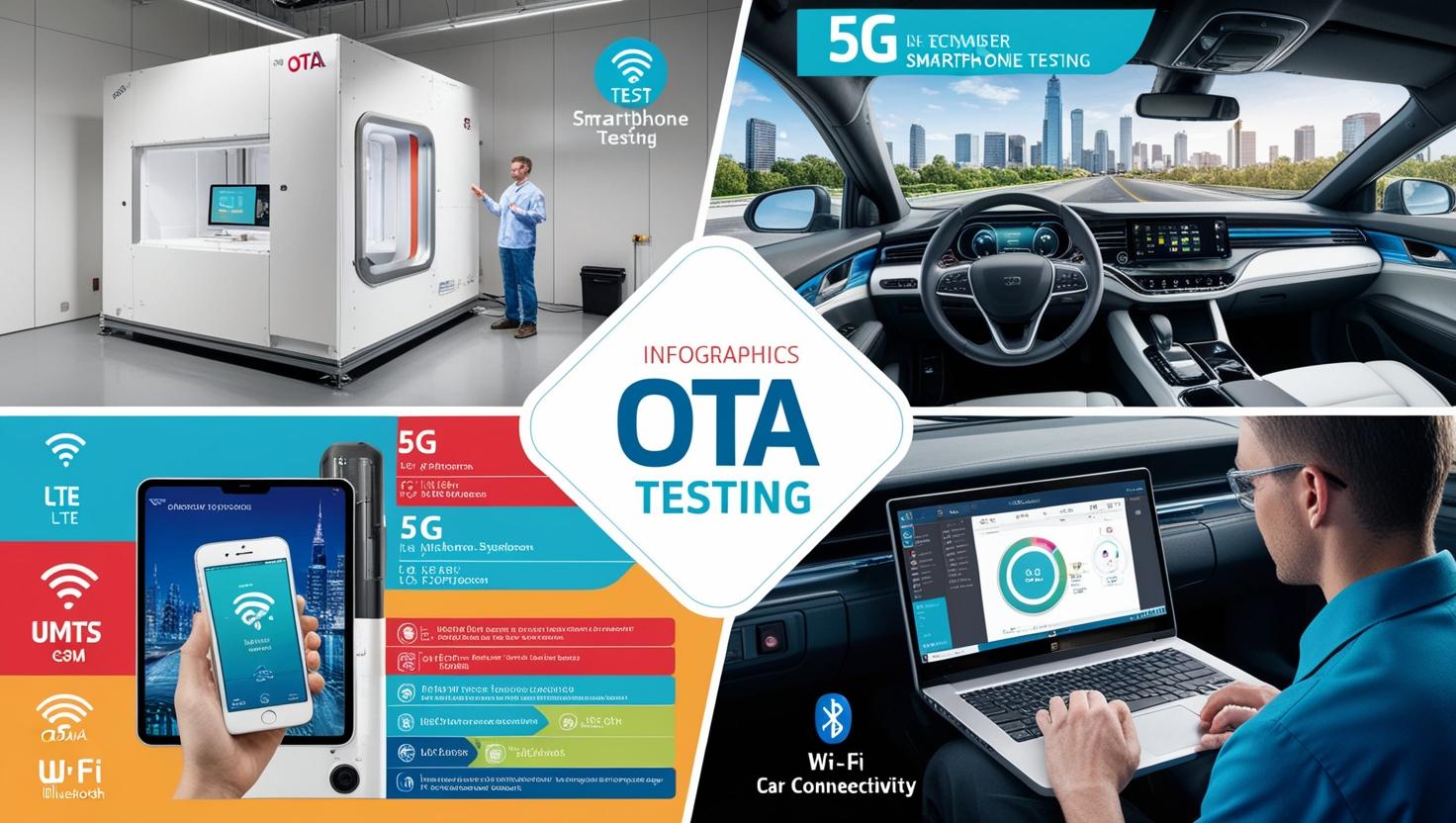
The OTA Testing Market encompasses a wide range of solutions, including test chambers, antenna testing solutions, software, and services. With the rise of 5G, LTE, UMTS, GSM, CDMA, Wi-Fi, and Bluetooth-enabled devices, ensuring seamless wireless performance has become more complex and critical. Manufacturers and service providers rely on OTA testing to validate signal integrity, data throughput, and device interoperability, reducing the risk of failures in real-world deployment.
According to industry analysts, the OTA testing market is projected to grow steadily, driven by:
-
Rapid adoption of 5G networks and IoT devices
-
Increasing complexity of multi-band, multi-antenna systems
-
Expansion of smart devices such as smartphones, laptops, tablets, and wearables
-
Growth in automotive connectivity and smart city infrastructure
Key Components of the OTA Testing Market
The OTA Testing Market can be segmented into several key components:
-
Test Chambers – Provide controlled environments for evaluating wireless performance without external interference. They are critical for testing multiple devices under standardized conditions.
-
Antenna Testing Solutions – Include equipment to measure antenna radiation patterns, gain, efficiency, and beamforming performance.
-
Software – OTA testing software manages test automation, data collection, analysis, and reporting for accurate results.
-
Services – Professional testing services help companies optimize device performance, comply with regulatory standards, and reduce time-to-market.
Each component plays a vital role in ensuring accurate, repeatable, and reliable testing outcomes across different device types and network technologies.
Download PDF Brochure @ https://www.marketsandmarkets.com/pdfdownloadNew.asp?id=168439990
Device and Network Applications
The OTA Testing Market serves a broad spectrum of devices and applications:
-
Smartphones and Tablets: As primary consumer devices, smartphones and tablets require extensive OTA testing to ensure connectivity across 5G, LTE, Wi-Fi, and Bluetooth networks.
-
Laptops and Notebooks: Increasingly equipped with wireless capabilities, laptops demand OTA testing for multi-band performance and interference mitigation.
-
Wearables: Smartwatches and fitness trackers rely on OTA testing for low-power, high-efficiency wireless communication.
-
Automotive & Transportation: Connected vehicles, ADAS (Advanced Driver Assistance Systems), and V2X (Vehicle-to-Everything) communication demand rigorous OTA testing for safety and reliability.
-
Smart Cities: IoT infrastructure, sensors, and public communication networks require OTA testing to ensure robust, scalable connectivity.
By testing across multiple technologies—5G, LTE, UMTS, GSM, CDMA, Wi-Fi, and Bluetooth—OTA solutions guarantee consistent performance in diverse environments.
Technological Trends in OTA Testing
The OTA Testing Market is evolving rapidly with emerging technologies:
-
5G mmWave Testing: With higher frequencies and directional beamforming, OTA testing for 5G requires advanced chambers and measurement techniques.
-
Multi-Device Simultaneous Testing: Efficiently evaluates multiple devices in real-time, critical for IoT ecosystems and large-scale deployments.
-
AI and Automation: Incorporating AI-driven analysis enhances data accuracy and reduces test cycle times.
-
Compact and Portable Test Solutions: On-the-go testing solutions cater to field and remote applications, supporting automotive and industrial needs.
These trends reflect the increasing complexity of wireless devices and networks, emphasizing the need for precise, scalable OTA testing solutions.
Market Growth and Future Outlook
The OTA Testing Market is poised for robust growth due to the proliferation of wireless devices, smart infrastructure projects, and 5G adoption worldwide. Manufacturers are investing in advanced testing solutions to reduce product recalls, improve customer experience, and ensure compliance with international standards.
Forecasts suggest continued expansion in automotive, wearable, and smart city applications, alongside growth in consumer electronics. The integration of AI, cloud-based analytics, and multi-device testing capabilities will further strengthen the OTA testing market’s value proposition.
The OTA Testing Market is a cornerstone of modern wireless technology, ensuring reliable performance across devices and networks. From smartphones and laptops to connected vehicles and smart city infrastructure, OTA testing validates functionality, enhances user experience, and supports industry compliance. As wireless connectivity becomes increasingly critical across sectors, the OTA Testing Market will continue to evolve, driven by technological innovation, growing device complexity, and the global shift toward next-generation networks.
Frequently Asked Questions (FAQ) – OTA Testing Market
1. What is OTA testing?
Over-the-Air (OTA) testing evaluates the wireless performance of devices in real-world or simulated environments. It measures signal quality, antenna performance, and network connectivity without physical connections to the device.
2. Why is OTA testing important?
OTA testing ensures that smartphones, laptops, wearables, automotive systems, and smart city devices maintain reliable connectivity across networks like 5G, LTE, UMTS, GSM, CDMA, Wi-Fi, and Bluetooth. It prevents performance issues, enhances user experience, and ensures compliance with regulatory standards.
3. What are the main components of the OTA Testing Market?
The OTA Testing Market includes:
- Test Chambers – Controlled environments to minimize interference during testing
- Antenna Testing Solutions – Evaluate antenna efficiency, gain, and beamforming
- Software – Automates testing, data analysis, and reporting
- Services – Professional support for testing, compliance, and optimization
4. Which devices require OTA testing?
OTA testing is critical for a wide range of devices, including:
- Smartphones, tablets, laptops, and notebooks
- Wearables such as smartwatches and fitness trackers
- Automotive and transportation systems (connected vehicles, ADAS, V2X)
- IoT devices in smart cities and industrial applications