
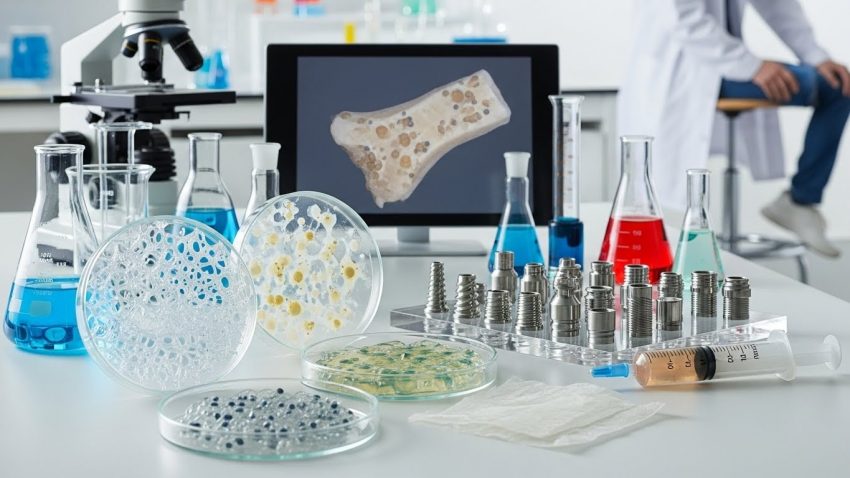
The global biomaterials market is entering a strong growth phase, supported by rising demand across medical applications and continuous innovation in material science. Valued at US$42.3 billion in 2023 and US$45.2 billion in 2024, the market is projected to reach US$64.2 billion by 2029, expanding at a compound annual growth rate (CAGR) of 7.3%. For manufacturers, healthcare suppliers, and technology providers, biomaterials represent a strategically important segment with long-term revenue potential.
Download PDF Brochure:https://www.marketsandmarkets.com/pdfdownloadNew.asp?id=393
Market growth fundamentals
The expansion of the biomaterials market is closely linked to increased funding in regenerative medicine and personalized healthcare, as well as broader adoption of biomaterials in therapeutic areas such as orthopedics, cardiovascular care, wound management, and plastic surgery. Hospitals and medical device manufacturers increasingly rely on advanced materials to improve healing outcomes, reduce infection risk, and enhance patient comfort.
Among key application areas, wound healing and plastic surgery stand out as major demand drivers. Biomaterials are widely used for tissue repair, burn treatment, soft tissue reconstruction, and coverage of complex wounds. Their ability to support natural healing processes and lower complication rates has led to higher adoption in both elective and trauma-related procedures. As healthcare providers aim to shorten recovery times and improve clinical results, the role of biomaterials continues to grow.
Segment overview: materials and applications
From a material perspective, the market is segmented into metallic, polymeric, ceramic, and natural biomaterials. In 2023, metallic biomaterials held the largest market share. Materials such as titanium alloys, stainless steel, cobalt-chrome alloys, and magnesium are widely used due to their mechanical strength, corrosion resistance, and suitability for load-bearing implants. Ongoing advances in manufacturing technologies and surface treatment methods further support the dominance of this segment, especially in orthopedic applications.
On the application side, orthopedics represents the largest and fastest-growing segment. Increasing cases of musculoskeletal disorders, joint degeneration, and sports injuries are driving demand for joint replacements, spinal implants, fracture fixation systems, and orthobiologics. In 2020 alone, around 494 million people worldwide were affected by musculoskeletal conditions, more than double the number reported in 1990. This long-term trend is creating sustained demand for reliable and high-performance biomaterials.
Other significant application areas include cardiovascular devices (such as stents and heart valves), dental implants, implantable wound care products, neurological systems, ophthalmology, tissue engineering, and drug delivery solutions.
Regional dynamics
North America currently holds the largest share of the global biomaterials market and is projected to grow at a CAGR of 7.4% during the forecast period. The region benefits from advanced healthcare infrastructure, strong research activity in biomaterial-based technologies, and a favorable regulatory environment. Rising incidence of chronic diseases, cancer, and cardiovascular disorders further supports demand, as does the growing popularity of plastic surgery procedures.
In contrast, the Asia Pacific region is expected to register the highest growth rate globally. Key factors include a rapidly aging population, increasing healthcare expenditure, adoption of new medical technologies, and a growing burden of chronic diseases. For global suppliers, Asia Pacific represents a major opportunity for market expansion and long-term partnerships.
Key challenges and restraints
Despite strong growth prospects, the market faces notable challenges. Biocompatibility issues remain a critical restraint, particularly in orthopedic and implantable devices. The success of medical implants depends heavily on the biological response of the human body, as well as the design and functional properties of the materials used. Inadequate compatibility can lead to inflammation, implant failure, or the need for revision surgery, increasing both clinical risk and cost.
Another important challenge relates to durability and long-term performance. Many biomaterials must function reliably for years under mechanical stress and biological exposure. In addition, disposal and recycling of used biomaterials present environmental concerns. Improper landfill disposal may cause soil and water pollution, while insufficient incineration can release harmful emissions. These sustainability and waste-management issues are increasingly influencing procurement decisions and regulatory policies.
Opportunity: bio-absorbable biomaterials
One of the most promising growth opportunities is the rising interest in bio-absorbable (bioresorbable) biomaterials. These materials gradually dissolve in the body and are replaced by natural tissue, eliminating the need for secondary surgeries to remove implants. Common examples include tricalcium phosphate and copolymers of polylactic and polyglycolic acid.
Between 2021 and 2024, investments in this segment increased significantly, with major suppliers expanding their research and commercial portfolios. Products such as the Absorv range from Zeus Company Inc. and RESOMER materials from Evonik Industries AG demonstrate how leading players are positioning themselves to benefit from this shift. For device manufacturers, bio-absorbable materials offer both clinical advantages and differentiation in competitive markets.
Competitive landscape and recent developments
The biomaterials market is highly competitive, with strong participation from global chemical and advanced materials companies. Key players include BASF SE, Covestro AG, Celanese Corporation, Evonik Industries AG, DSM, Corbion NV, Victrex Plc, CeramTec GmbH, Mitsubishi Chemical Group, CoorsTek Inc., and Zeus Company Inc.
Sustainability and innovation are major strategic priorities. In 2022, BASF introduced Ultraform LowPCF and Ultraform BMB, focusing on reducing product carbon footprint through green electricity and energy-efficient production. Covestro followed in 2023 with Makrolon 3638 polycarbonate, designed for durable healthcare and life science applications. Celanese also strengthened its North American distribution network through a strategic agreement with Ravago for its Santoprene and Geolast product lines.
Download PDF Brochure:https://www.marketsandmarkets.com/pdfdownloadNew.asp?id=393
Conclusion
With steady growth, expanding clinical applications, and strong regional demand, the biomaterials market offers significant opportunities for B2B stakeholders across the value chain. Companies that invest in advanced materials, bio-absorbable technologies, and sustainable production methods will be best positioned to capture future demand. At the same time, addressing biocompatibility, durability, and environmental challenges will be essential for long-term success in this evolving industry.