
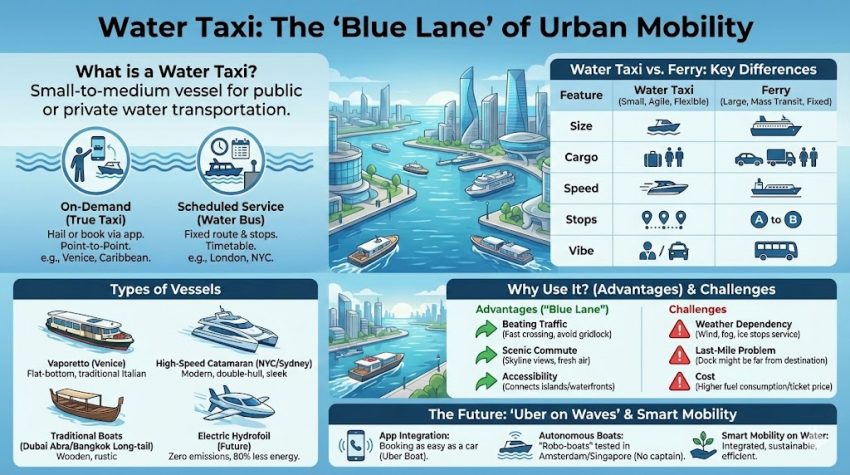
The Water Taxi Market is gaining global attention as cities and coastal regions explore alternative transportation modes that reduce congestion and improve mobility efficiency. Water taxis are redefining short distance passenger transport by utilizing rivers, harbors, canals, and coastal waters as active transit corridors. The Water Taxi Market has evolved from primarily tourism oriented services into structured mobility solutions that support daily commuting, business travel, and integrated urban transportation networks.
The increasing strain on road infrastructure, combined with rising environmental awareness, has encouraged municipalities to reconsider how waterways can support public transport strategies. The Water Taxi Industry offers practical advantages such as predictable travel times, high passenger satisfaction, and lower infrastructure expansion requirements. By leveraging natural waterways, cities can expand transport capacity without significant land disruption.
As urban populations grow and waterfront development accelerates, water taxi services are becoming essential components of modern maritime mobility. With advancements in vessel efficiency, digital service platforms, and low emission technologies, the Water Taxi Market is positioned for long term transformation.
Role of Water Taxis in Modern Urban Transportation
Urban mobility systems are under pressure to meet increasing demand while aligning with sustainability goals. The Water Taxi Market addresses these challenges by offering an adaptable, scalable solution that complements land based transport. Water taxis allow cities to distribute passenger flows more evenly across different transport modes, reducing congestion hotspots and improving overall mobility resilience.
Unlike traditional ferry services, water taxis focus on flexibility and frequency. They can operate across shorter routes, connect underserved areas, and provide point-to-point travel options. This flexibility enhances accessibility for residential communities, business districts, and recreational zones near waterways. The Water Taxi Market thus plays a critical role in improving last mile connectivity and expanding transport choice.
Digital innovations have further strengthened this role. Passengers can now access real time schedules, mobile payment systems, and route notifications, enhancing service transparency and usability. These developments are transforming the Water Taxi Market into a user centric transportation model.
Key Growth Drivers in the Water Taxi Market
Rising Urban Congestion and Mobility Demand
As cities struggle with increasing traffic density, water taxis provide an effective alternative that reduces dependency on road networks. The Water Taxi Market benefits from the ability to bypass surface congestion while still delivering reliable passenger movement across urban zones.
Tourism Expansion and Waterfront Revitalization
Tourism development continues to be a significant catalyst for the Water Taxi Market. Waterfront destinations prioritize water based transportation to enhance visitor experience while minimizing road traffic. Water taxis offer scenic, efficient, and comfortable travel that aligns well with tourism driven urban economies.
Sustainability and Environmental Policy Alignment
Environmental policies encouraging low impact transportation are accelerating adoption within the Water Taxi Market. Electric and hybrid propulsion systems reduce emissions and noise, making water taxis attractive to environmentally focused municipalities. Sustainability initiatives have become a core component of water taxi expansion strategies.
Advancements in Marine Engineering
Improvements in vessel design, lightweight materials, and propulsion efficiency are shaping the future of the Water Taxi Market. These advancements allow operators to deliver safer, more cost efficient services while enhancing passenger comfort across diverse operating environments.
To Know About the Assumptions Considered for the Study Download the PDF Brochure
Emerging Trends in the Water Taxi Market
Electrification of Water Taxi Fleets
Electrification is reshaping the Water Taxi Market by enabling quieter and cleaner operations. Electric water taxis are particularly suited for dense urban areas where environmental impact and passenger comfort are critical considerations.
Smart Fleet Management Systems
Operators are increasingly deploying digital tools to monitor vessel performance, passenger demand, and route efficiency. These systems help optimize scheduling and reduce operational downtime, strengthening the competitive positioning of water taxi providers.
On-Demand and Flexible Routing Models
On demand mobility is influencing service offerings across the Water Taxi Market. Passengers increasingly expect flexible routes and personalized transport experiences. Water taxis that adapt to real time demand gain stronger customer loyalty and utilization rates.
Integration with Multimodal Transport Networks
Water taxis are becoming fully integrated into broader mobility ecosystems that include buses, rail systems, cycling infrastructure, and pedestrian pathways. This integration elevates the role of the Water Taxi Market in comprehensive urban transport planning.
Operational Constraints in the Water Taxi Market
Regulatory and Licensing Requirements
Compliance with maritime safety, navigation, and local transport regulations can affect expansion speed. Regulatory variation across regions requires operators to adopt tailored compliance approaches within the Water Taxi Market.
Weather Dependence and Seasonal Variability
Environmental conditions influence operational consistency. Service planning and vessel design must account for variability to ensure uninterrupted passenger transport throughout different seasons.
Water Taxi Market Segmentation Overview
By Vessel Technology
The Water Taxi Market includes a range of vessels from conventional marine engines to fully electric designs. Vessel selection depends on route distance, passenger capacity, and local environmental regulations.
By Service Application
Services span commuter transport, tourism excursions, charter operations, and event based mobility. This versatility allows the Water Taxi Market to address diverse revenue streams and customer preferences.
By Passenger Category
Users include daily commuters, tourists, corporate travelers, and public sector agencies. The diversity of end users enhances the long term resilience of the Water Taxi Market.
Regional Insights into the Water Taxi Market
North America
Water taxi services in North America benefit from strong urban infrastructure, active waterfront development, and supportive sustainability policies. Cities with major rivers and harbors continue to expand water based mobility options.
Europe
Europe showcases mature adoption of water taxis as public transport assets. Dense canal networks, historic waterfronts, and sustainability driven transport frameworks contribute to widespread market acceptance.
Asia Pacific
Urban expansion, tourism growth, and coastal development are fueling strong momentum in the Water Taxi Market across Asia Pacific. Governments increasingly view water taxis as solutions for traffic congestion and transport diversification.
Other Regions
Coastal regions and island based developments rely on water taxis to provide primary mobility access. Investment in maritime connectivity supports ongoing regional market expansion.
Competitive Landscape of the Water Taxi Market
Competition within the Water Taxi Market centers on service quality, fleet modernization, sustainability performance, and integration with urban transport networks. Operators that invest in digital platforms and low emission vessels achieve stronger competitive advantages.
Key Players in the Water Taxi Market
NY Waterway: NY Waterway operates commuter focused water taxi services that integrate seamlessly with urban transit systems. Its emphasis on reliability and passenger convenience strengthens its leadership role in the Water Taxi Market.
Thames Clippers: Thames Clippers delivers high frequency water taxi services designed for daily commuting and tourism. Its operational scale and fleet modernization efforts highlight best practices within the Water Taxi Market.
Sydney Ferries: Sydney Ferries combines commuter services with tourism driven routes, offering consistent service quality across urban and waterfront corridors. Continuous investment in vessel modernization supports long term growth.
Vaporetto Services: Vaporetto Services demonstrate how water taxis can serve as primary public transport solutions in canal based cities. Their integration into everyday mobility reinforces the functional value of the Water Taxi Market.
Barton Marine Transport: Barton Marine Transport specializes in urban water taxi operations tailored to local mobility needs. Its focus on safety, service efficiency, and customer experience supports competitive differentiation.
Future Outlook of the Water Taxi Market
The future of the Water Taxi Market is aligned with the global push toward sustainable, resilient transportation systems. As cities seek innovative mobility solutions, water taxis will increasingly complement land based networks. Electrification, autonomous navigation technologies, and expanded digital services will further enhance operational efficiency and passenger engagement.
Urban planning initiatives are expected to prioritize water based mobility corridors, creating new opportunities for market expansion. With continued collaboration between public authorities and private operators, the Water Taxi Market is positioned to become an integral component of future smart city transportation models.
Related Report:
Water Bus Market by Propulsion (Fully Electric, Fuel-Powered, Hybrid Electric), Capacity (<25 Pax, 26–50 Pax, 51-75 Pax), Operation (Intercity, Intra City), and Region Global Forecast to 2030