
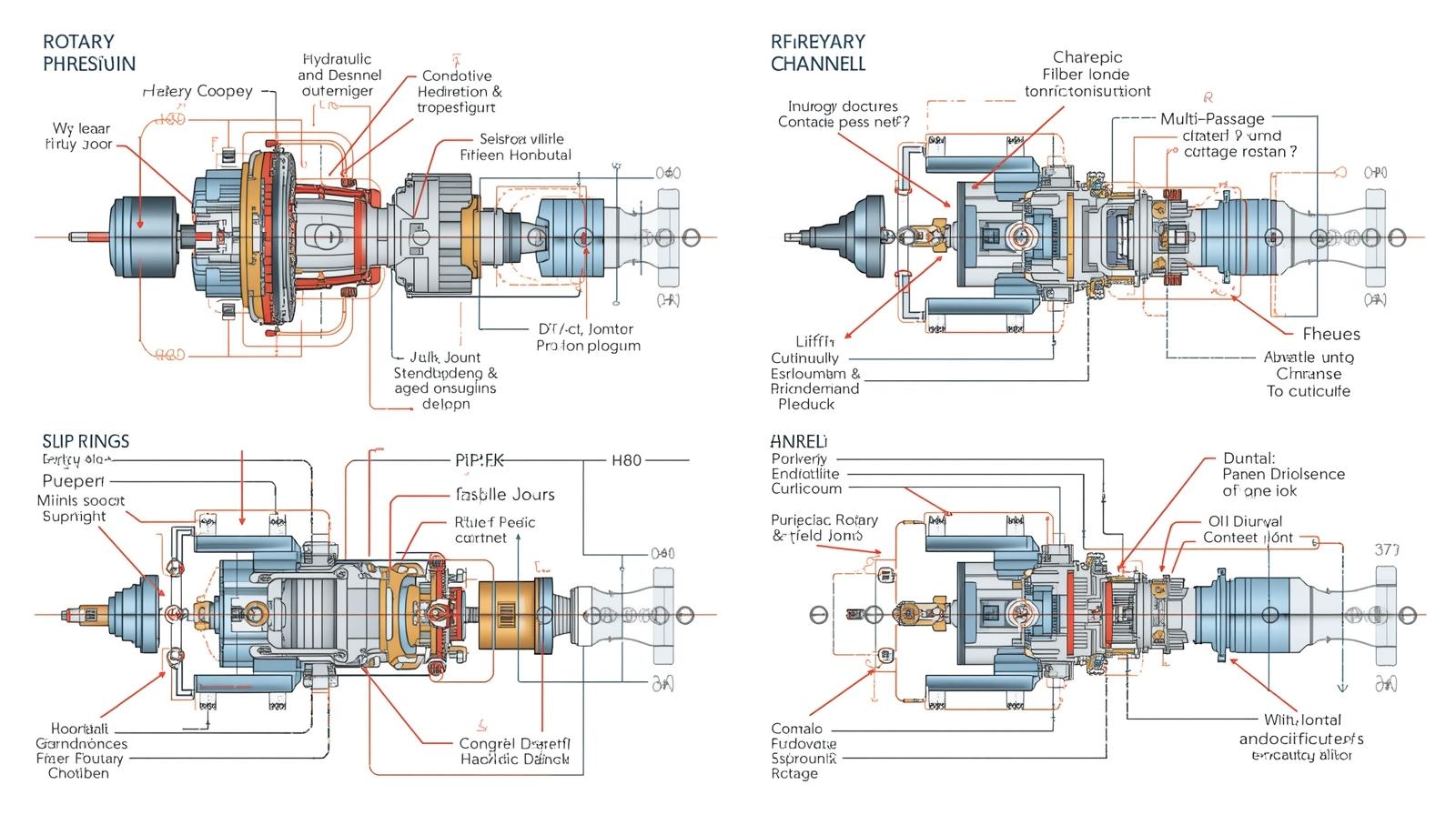
The Rotary and RF Rotary Joints Market Size is poised for significant growth as industrial automation accelerates across multiple sectors. Rotary and RF rotary joints, essential components in machinery that require continuous rotation while transferring fluids, gases, or signals, are increasingly in demand across industries such as aerospace, defense, robotics, medical imaging, and energy. Rising automation, coupled with technological advancements in rotary joint design, is driving the market to new heights.
Rising Industrial Automation Driving Market Growth
The increasing adoption of automated manufacturing systems is a primary factor boosting the Rotary and RF Rotary Joints Market Size. Automated production lines, robotic arms, and CNC machines rely heavily on reliable rotary joints to ensure uninterrupted transfer of hydraulic fluids, coolants, and RF signals. As industries invest in efficiency and precision, the demand for high-performance rotary and RF rotary joints continues to grow.
Technological Innovations Supporting Market Expansion
Advances in materials, sealing technologies, and high-frequency signal transmission are enhancing the performance of rotary and RF rotary joints. These innovations are not only improving reliability but also extending the operational lifespan of components in harsh environments. The Rotary and RF Rotary Joints Market Size benefits from these developments, as manufacturers can now provide solutions for more complex industrial applications, including high-speed machining, radar systems, and automated robotics.
Download PDF Brochure @ https://www.marketsandmarkets.com/pdfdownloadNew.asp?id=153269258
Applications Across Key Industries
The growth of the Rotary and RF Rotary Joints Market Size is closely tied to its diverse applications:
-
Aerospace and Defense: High-frequency RF rotary joints are crucial for radar, satellite communication, and defense radar systems, ensuring accurate signal transmission during continuous rotation.
-
Medical Imaging: Rotary joints in CT and MRI machines enable precise and uninterrupted scanning.
-
Industrial Robotics: Automated robotic arms and assembly lines use rotary joints for fluid and power transfer during continuous motion.
-
Energy and Power Generation: Rotary joints are essential in turbines, wind energy systems, and hydraulic machinery for smooth, continuous operations.
Regional Insights
Asia-Pacific is expected to see significant growth in the Rotary and RF Rotary Joints Market Size due to rapid industrialization and automation in countries like China, Japan, and South Korea. North America and Europe also show steady growth driven by aerospace, defense, and advanced manufacturing sectors. Emerging economies are increasingly investing in robotics and automated production lines, further expanding market opportunities.
Key Market Trends
-
Miniaturization and Compact Designs: Demand for smaller, more efficient rotary and RF rotary joints is rising, especially in robotics and medical devices.
-
High-Frequency and High-Speed Solutions: Advanced RF rotary joints capable of handling higher frequencies and rotation speeds are boosting market growth.
-
Integration with Smart Manufacturing: IoT-enabled rotary joints are becoming more common, allowing real-time monitoring and predictive maintenance.
-
Sustainable and Energy-Efficient Designs: Manufacturers are focusing on materials and designs that reduce energy consumption while maintaining high performance.
Future Outlook
The Rotary and RF Rotary Joints Market Size is expected to expand steadily over the next decade, driven by industrial automation, technological innovation, and increasing demand across aerospace, defense, medical, and robotics sectors. As manufacturers continue to innovate and provide high-performance, reliable solutions, the market will witness enhanced adoption in both emerging and developed economies.
The growth of industrial automation and technological advancements are key factors fueling the expansion of the Rotary and RF Rotary Joints Market Size. With applications across multiple industries and ongoing innovations in design, high-frequency performance, and smart integration, rotary and RF rotary joints will continue to play a crucial role in modern industrial operations. Investors and manufacturers focusing on high-performance solutions are well-positioned to benefit from this rapidly growing market.
FAQ: Rotary and RF Rotary Joints Market
Q1: What are rotary and RF rotary joints?
A: Rotary joints are mechanical components that allow the transfer of fluids, gases, or signals between stationary and rotating parts. RF (Radio Frequency) rotary joints specifically transmit high-frequency signals during rotation, commonly used in radar, aerospace, and communication systems.
Q2: Why is the Rotary and RF Rotary Joints Market growing?
A: The market is expanding due to rising industrial automation, increasing use of robotics, aerospace and defense applications, medical imaging equipment, and energy systems requiring reliable continuous transfer of fluids or signals.
Q3: Which industries use rotary and RF rotary joints?
A: Key industries include:
-
Aerospace and Defense (radar and communication systems)
-
Industrial Automation and Robotics
-
Medical Imaging (CT and MRI machines)
-
Energy and Power Generation (turbines, wind energy)
Q4: What are the major trends in the market?
A:
-
Miniaturization and compact designs for robotics and medical applications
-
High-speed and high-frequency RF rotary joints
-
Integration with IoT and smart manufacturing for predictive maintenance
-
Energy-efficient and durable designs